 EN
EN


The reliability and longevity of any pumping system depend fundamentally on one often-overlooked component: the mechanical seal. This critical interface sits at the heart of fluid handling operations across petrochemicals, power generation, food processing, and countless industrial sectors. Selecting the right mechanical seal isn't merely a technical specification task; it's a strategic decision that directly impacts operational safety, equipment lifespan, maintenance schedules, and total cost of ownership.
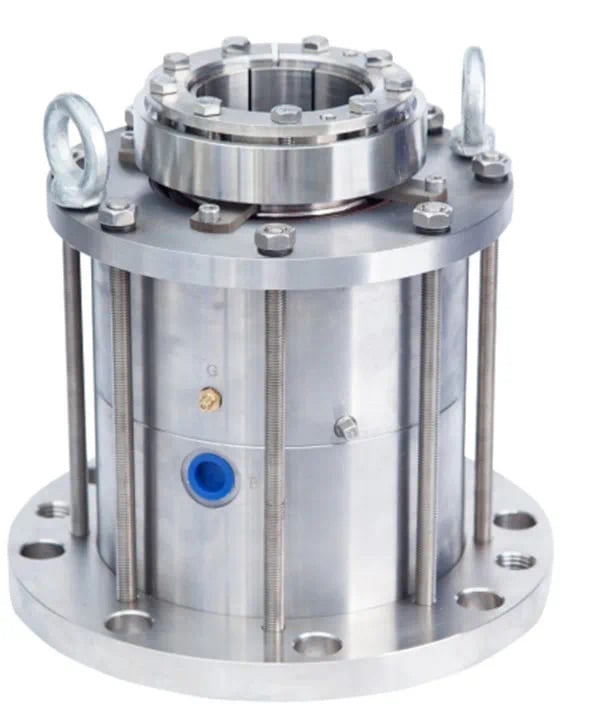
A mechanical seal serves as a dynamic barrier between the rotating pump shaft and the stationary housing, preventing fluid leakage into the environment or atmospheric contamination into the process. When a mechanical seal is chosen poorly—whether due to incompatible materials, incorrect pressure ratings, or mismatched fluid chemistry compatibility—the consequences cascade rapidly: unexpected downtime, environmental compliance violations, product contamination, safety hazards, and emergency repair costs that dwarf the initial savings from cutting corners on mechanical seal specification.
Understanding Mechanical Seal Failure Modes and Their Root Causes
Common Failure Mechanisms in Mechanical Seal Installations
Mechanical seal failures rarely occur by accident; they result from predictable combinations of misapplication, environment mismatch, or inadequate design parameters. The most frequent mechanical seal failure modes include thermal distortion, when operating temperatures exceed material tolerance limits; material incompatibility, when the sealed fluid attacks elastomer components or corrodes metal faces; cavitation and vapor lock, which create instability in the sealing interface; and mechanical wear, accelerated by particulate contamination or inadequate lubrication. Understanding these failure pathways reveals why mechanical seal selection cannot be treated as a generic, one-size-fits-all decision.
Cost Implications of Mechanical Seal Misapplication
When a mechanical seal fails prematurely due to poor selection, the financial impact extends well beyond seal replacement cost. A failed mechanical seal in a critical process pump can trigger unplanned shutdowns lasting hours or days, halting production lines, disrupting supply chains, and generating revenue loss measured in thousands or tens of thousands of dollars per hour. Additionally, environmental regulations impose fines for fluid leakage, and worker safety becomes compromised if hazardous materials escape containment. Investing adequate time and expertise into mechanical seal selection during initial procurement virtually always returns savings through extended runtime and reduced emergency interventions.
Key Parameters That Define Mechanical Seal Performance and Selection
Material Compatibility and Chemical Resistance
Mechanical seal performance hinges critically on material selection relative to the pumped fluid. Each mechanical seal consists of primary and secondary elements—typically carbon or ceramic faces paired with elastomer seals—and these materials must withstand continuous contact with aggressive liquids. A mechanical seal designed for water may fail catastrophically within days if applied to concentrated acid or hydrocarbon streams. Elastomers swell, harden, or dissolve; metal components corrode; and face materials crack under chemical attack. Specifying a mechanical seal requires cross-referencing fluid composition, temperature, pH, and corrosivity against established material compatibility matrices before installation begins.
Pressure and Temperature Operating Boundaries
Every mechanical seal operates within finite pressure and temperature envelopes established by its design and materials. Exceeding these limits degrades mechanical seal performance systematically: elevated pressure increases face loading and wear rates; temperature rise reduces elastomer resilience, distorts machined tolerances, and can trigger face separation. When selecting a mechanical seal, engineers must not only match the current duty point but also account for process transients, start-up peaks, and potential upset conditions. A mechanical seal rated conservatively—with adequate safety margins above maximum anticipated pressure and temperature—provides operational flexibility and extended service life compared to one sized exactly to nominal conditions.
Mechanical Seal Selection as Strategic Risk Management
Balancing Initial Cost Against Lifecycle and Downtime Risk
Many organizations default to purchasing the lowest-cost mechanical seal that appears to fit the pump model, deferring to purchasing departments rather than engaging process engineers. This approach treats mechanical seal selection as a commodity decision rather than an engineering decision. However, the price difference between an inadequate mechanical seal and a properly specified one is typically five to fifteen percent of total seal cost—a trivial margin compared to downtime risk. Sophisticated operations recognize that mechanical seal selection warrants cross-functional input from process engineering, maintenance, procurement, and reliability teams, because a single poor mechanical seal choice can cost more in unplanned downtime than years of optimized seal procurement.
Alignment Between Mechanical Seal Specification and Pump Reliability Strategy
Organizations pursuing proactive reliability management treat mechanical seal selection as integral to their predictive maintenance and condition-monitoring programs. A properly selected mechanical seal generates predictable wear patterns, enabling maintenance planners to schedule replacement during planned shutdowns rather than emergency repairs. Conversely, a mechanical seal chosen without adequate technical rigor introduces unpredictability: it may fail suddenly, without warning, or degrade erratically across a fleet of identical pumps. By connecting mechanical seal selection to reliability objectives, maintenance scheduling, and spare parts strategy, facilities transform seal procurement from a reactive transaction into a strategic tool for operational consistency.
Practical Guidance for Mechanical Seal Selection Excellence
Engineering Data Required Before Mechanical Seal Procurement
Initiating mechanical seal selection requires assembling complete pump duty specifications: fluid identity and chemical family; minimum, nominal, and maximum operating pressure; minimum, nominal, and maximum operating temperature; pump shaft speed; shaft diameter and surface finish; and any special requirements such as sterile or hazardous-area certification. This data package must be communicated to mechanical seal manufacturers or distributors before selection, enabling them to recommend a mechanical seal configuration optimized for the actual duty rather than guessed assumptions. Additionally, documenting the operating history of existing mechanical seals—whether in this specific pump or similar installations—provides valuable feedback for mechanical seal redesign or confirmation.
Verification and Testing Before Full-Scale Mechanical Seal Deployment
For critical applications or when operating with unusual fluids, pilot testing of the proposed mechanical seal configuration reduces deployment risk. A trial run lasting days or weeks in a non-critical pump or test loop validates that mechanical seal selection performs as expected before committing to production duty. This verification step is particularly valuable when introducing a new mechanical seal brand, switching suppliers, or changing fluid chemistries. The cost of a short-term trial is recovered many times over if it prevents a catastrophic failure in a mission-critical application.
FAQ
What happens if I choose the wrong mechanical seal for my pump?
Selecting an incorrect mechanical seal can trigger rapid failure, unplanned downtime, environmental leaks, and contamination of your product. Process fluids incompatible with mechanical seal elastomers will degrade seals within days or weeks; pressure or temperature mismatches cause face separation and leakage; and inadequate corrosion resistance allows component degradation. Investing time upfront to specify the correct mechanical seal prevents costly emergency repairs and operational disruptions.
How do I know which mechanical seal material is compatible with my fluid?
Material compatibility for a mechanical seal depends on your fluid's chemical family, corrosivity, and operating temperature. Most mechanical seal manufacturers provide detailed compatibility charts cross-referencing elastomer materials against common fluid types. Consult these charts and communicate your exact fluid composition to your mechanical seal supplier before ordering. Testing or pilot operation is advisable if operating with unusual or aggressive fluids where mechanical seal compatibility is uncertain.
Can I use the same mechanical seal across different pump models and applications?
While some mechanical seal designs are modular and adaptable, each pump application has unique pressure, temperature, speed, and fluid compatibility requirements. A mechanical seal optimized for one duty may perform poorly or fail in another. Always specify mechanical seal selection based on the actual pump model, application duty, and fluid chemistry rather than assuming interchangeability. This approach ensures reliable performance and prevents costly application mistakes.