 EN
EN


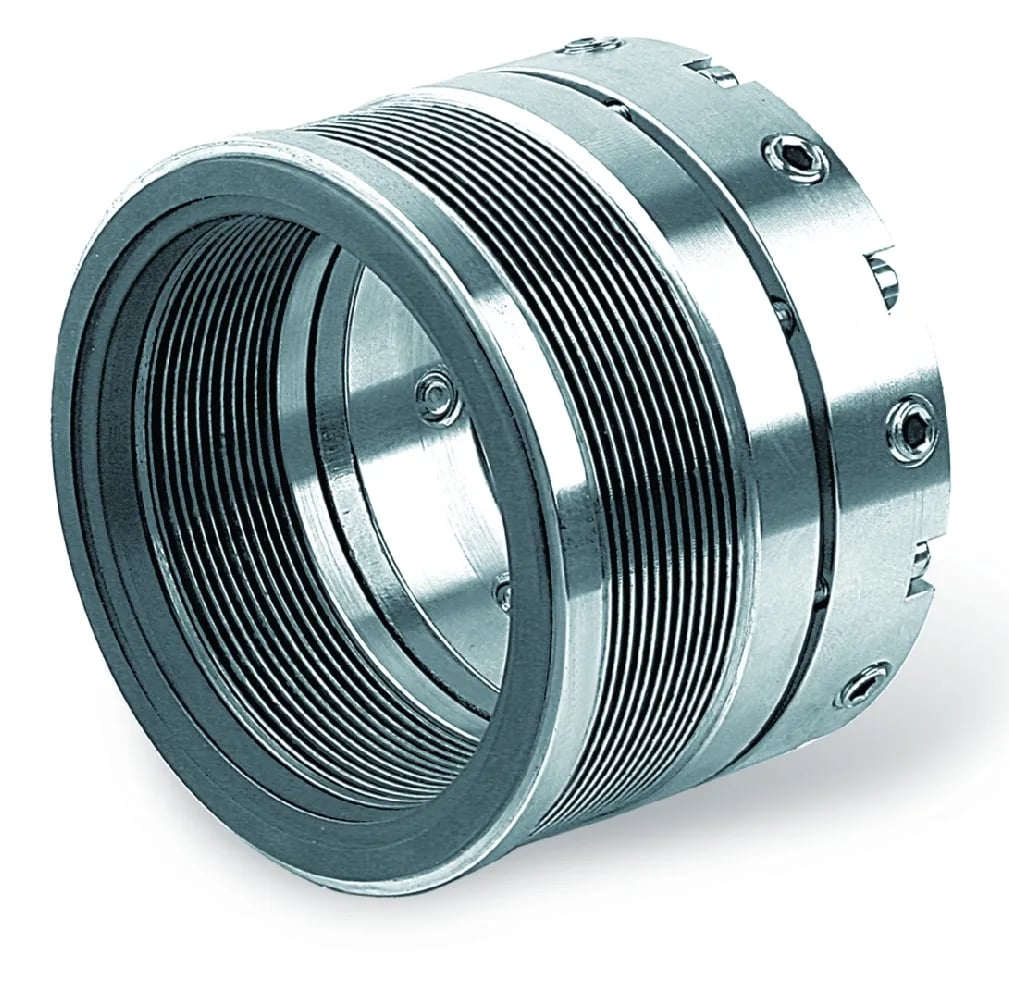
Mechanical Seal Definition and Core Function in Rotating Equipment
A mechanical seal is a precision-engineered device that prevents fluid leakage where a rotating shaft passes through a stationary housing. It achieves this by maintaining controlled contact—or near-contact—between two highly polished, lapped faces: one rotates with the shaft, the other remains fixed to the housing. Unlike traditional compression packing, which relies on high friction and frequent adjustment, mechanical seals operate with minimal wear, lower heat generation, and significantly reduced leakage. Their core function is to contain process fluids—liquids or gases—within rotating equipment such as centrifugal pumps, compressors, and mixers while preserving system pressure, preventing environmental contamination, and supporting continuous, reliable operation. They are indispensable across water treatment, chemical processing, oil & gas, and pharmaceutical industries, especially where emissions control, safety, or regulatory compliance is critical.
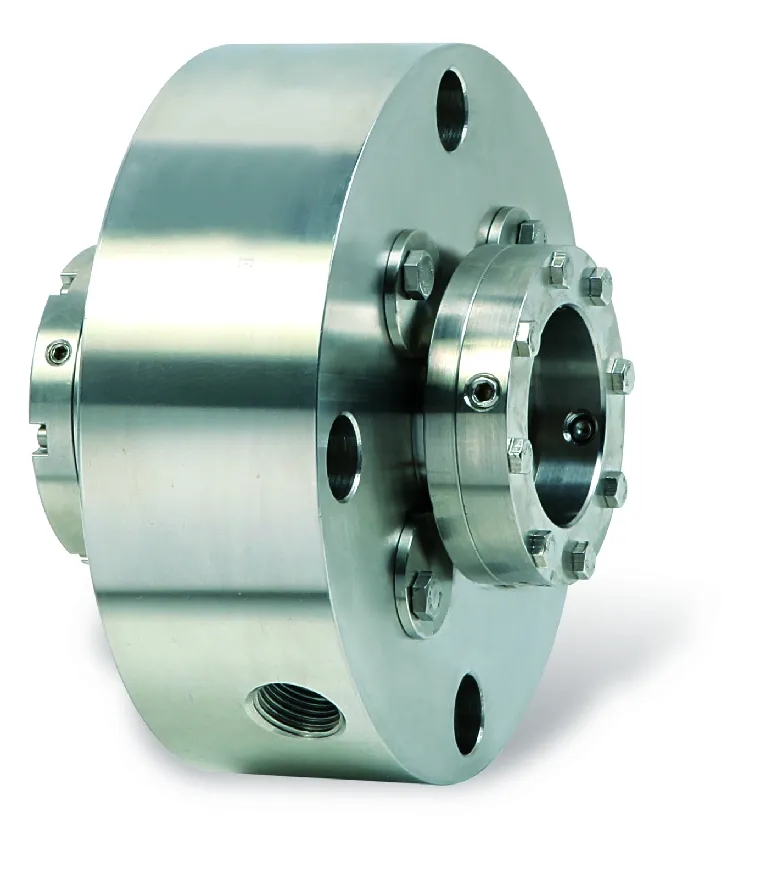
How a Mechanical Seal Works: The Physics of Dynamic Sealing
Fluid film formation and micro-gap lubrication enabling non-contact operation
Mechanical seals operate on the principle of hydrodynamic or hydrostatic lubrication, depending on design and service conditions. In most standard applications, a stable fluid film—typically 0.5 to 5 microns thick—forms between the rotating and stationary faces. This film is generated by the process fluid itself, drawn into the micro-gap via viscous shear as the shaft rotates. Surface tension, fluid viscosity, and hydrodynamic pressure interact to lift the faces slightly apart, preventing direct metal-to-metal contact during steady-state operation. This near-contact regime minimizes friction, heat buildup, and wear—key contributors to extended seal life and consistent performance.
Force balance: spring load, hydraulic pressure, and face deformation control
Seal stability hinges on precise force equilibrium. A spring (or bellows) applies a controlled closing force to maintain face contact during startup, shutdown, or transient conditions. Meanwhile, hydraulic pressure from the process fluid generates an opening force that separates the faces. Seal geometry—including face width, coning angle, and groove patterns—is engineered to modulate this balance. Under operating temperature and pressure, slight elastic deformation occurs in both faces and mating components; robust designs account for these changes to preserve gap consistency and sealing integrity across shaft movement, vibration, and gradual wear.
Key Mechanical Seal Components and Their Sealing Roles
Primary sealing faces (rotating vs. stationary) and material pairing
The primary seal interface consists of two ultra-flat, lapped faces—one mounted on the rotating shaft assembly, the other fixed to the pump or equipment housing. These faces form the principal barrier against fluid escape. Material pairings—such as carbon-graphite against silicon carbide or tungsten carbide—are selected to optimize wear resistance, thermal conductivity, chemical compatibility, and coefficient of friction. When properly matched to service conditions, they sustain a stable fluid film that limits leakage to under 5 mL/hr in standard-duty applications while enabling low-friction, long-life operation.
Secondary seals, springs, and gland hardware — supporting integrity and alignment
Secondary seals—including elastomeric O-rings, PTFE gaskets, or metal bellows—prevent leakage at auxiliary interfaces: shaft-to-sleeve, sleeve-to-housing, and gland-to-housing. They accommodate thermal expansion, radial runout, and minor misalignment without compromising the primary seal. Springs (single, multiple, or wave-type) deliver consistent, wear-compensating loading force, maintaining face contact despite up to 0.5 mm of axial wear. Gland plates, drive collars, and set screws ensure accurate axial positioning and torque transmission, allowing the seal to tolerate ±3° angular misalignment and up to 0.13 mm axial shaft movement—all without disrupting the critical face interface.
Why Mechanical Seals Deliver Reliable Dual-Layer Leakage Control
Mechanical seals provide inherently robust leakage control through a dual-barrier architecture. The primary barrier is formed by the precisely lapped rotating and stationary faces, held together by spring and hydraulic forces. Their flatness and surface finish enable formation of a stable micro-gap fluid film—sufficient for lubrication but insufficient for bulk leakage. The secondary barrier comprises elastomeric or metallic seals at static and dynamic auxiliary interfaces, blocking leakage paths along the shaft, housing bore, or gland assembly. This layered approach delivers far superior containment compared to conventional packing—reducing fugitive emissions, enhancing personnel safety around hazardous fluids, and improving energy efficiency by minimizing internal recirculation and pressure loss. When correctly specified and maintained, this dual-layer system extends equipment service intervals, reduces unplanned downtime, and supports compliance with EPA, ISO 14001, and API 682 standards.
FAQ
Q: What is the main function of a mechanical seal?
A: The primary function of a mechanical seal is to prevent fluid leakage in rotating equipment by maintaining controlled contact between two polished faces, ensuring reliable operation and system pressure maintenance.
Q: How does a mechanical seal minimize wear and heat?
A: Mechanical seals use a stable fluid film to lubricate and separate the rotating and stationary faces, reducing friction, heat generation, and wear.
Q: What industries commonly use mechanical seals?
A: Mechanical seals are widely used in industries like water treatment, chemical processing, oil & gas, and pharmaceuticals due to their superior leakage control and regulatory compliance capabilities.
Q: What materials are used in the sealing faces of a mechanical seal?
A: Common material pairings for sealing faces include carbon-graphite, silicon carbide, and tungsten carbide, chosen for their wear resistance and chemical compatibility.
Q: What is the purpose of the dual-barrier system in mechanical seals?
A: The dual-barrier system ensures superior fluid containment by combining primary face sealing with secondary seals to block leaks at auxiliary interfaces.