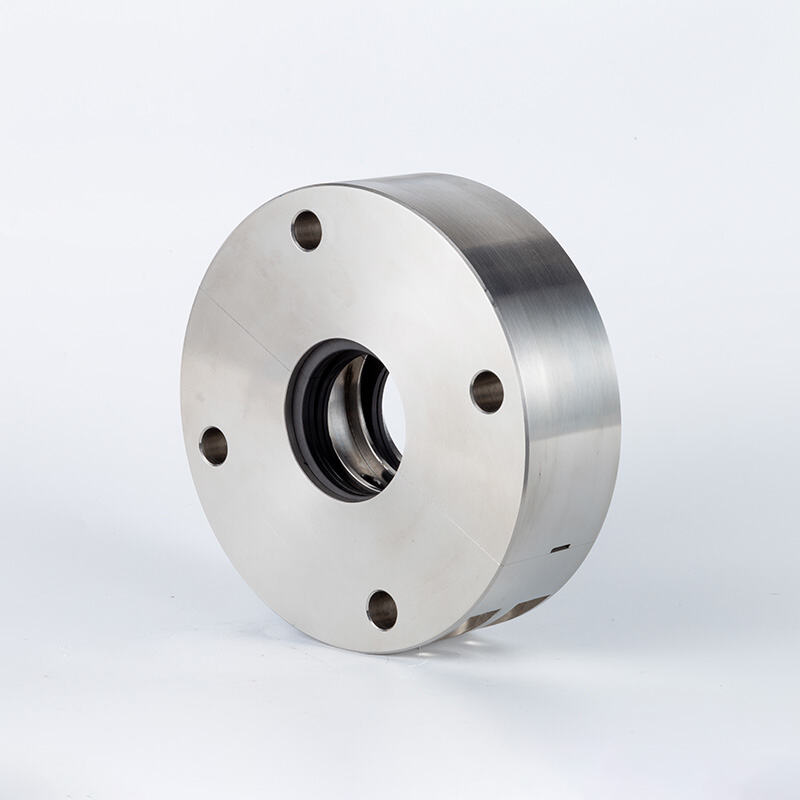

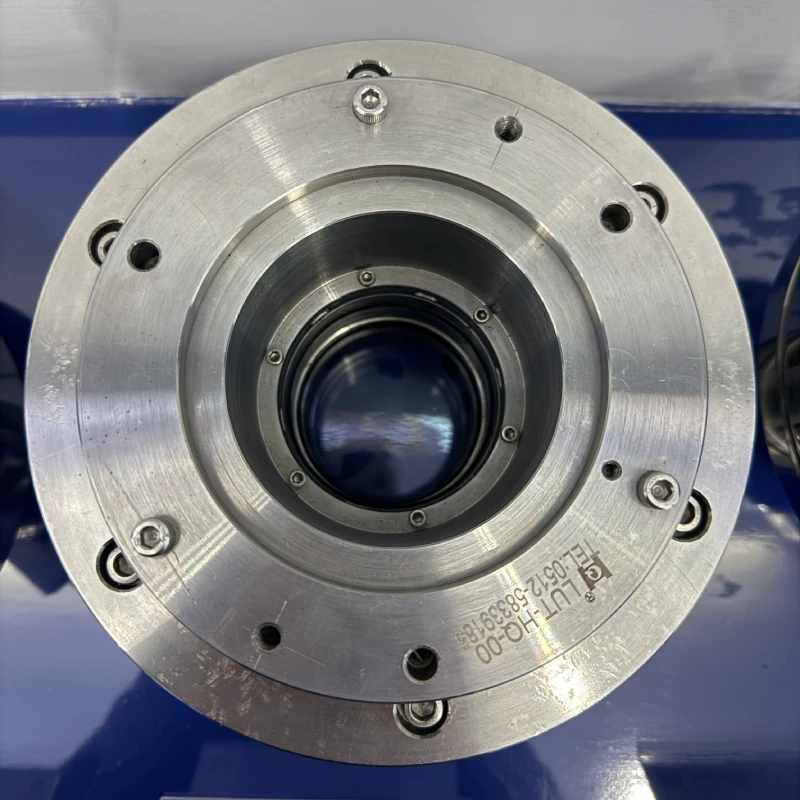
Metal bellow seals represent a sophisticated sealing technology designed to address critical challenges in mechanical systems where conventional sealing methods fall short. These specialized components combine the resilience of metal bellows with precision-engineered sealing faces to create leak-proof barriers in rotating equipment such as pumps, compressors, and mixers. Unlike traditional packing or simple mechanical seals that rely on elastomers or flexible materials, metal bellow seals utilize the inherent flexibility of corrugated metallic structures to maintain constant sealing force while accommodating shaft movement and thermal expansion. This unique design eliminates the need for secondary sealing elements that are prone to degradation in harsh operating environments, making metal bellow seals the preferred solution for applications involving extreme temperatures, aggressive chemicals, or high-purity process requirements.
Understanding what metal bellow seals are and how they function is essential for engineers and maintenance professionals tasked with selecting appropriate sealing solutions for demanding industrial applications. The fundamental architecture of these seals integrates a metal bellows element as the primary spring and secondary seal, eliminating common failure modes associated with elastomeric components. This construction method ensures exceptional reliability in environments where temperature extremes, chemical exposure, or contamination concerns would rapidly degrade conventional seal designs. The operational mechanics of metal bellow seals involve a carefully balanced interplay between material properties, geometric design, and hydraulic principles that work together to maintain effective sealing throughout the equipment's service life, even under challenging operational conditions that would compromise alternative sealing technologies.

The Fundamental Components of Metal Bellow Seals
Primary Sealing Faces and Contact Interface
The primary sealing interface in metal bellow seals consists of two precisely lapped faces that rotate against each other with minimal clearance, creating a fluid barrier through controlled contact pressure. One sealing face remains stationary, mounted in the seal gland or housing, while the rotating face attaches to the shaft assembly through the metal bellows structure. These faces are typically manufactured from advanced materials such as silicon carbide, tungsten carbide, or ceramic composites, selected specifically for their hardness, wear resistance, and compatibility with the process fluid. The flatness of these faces is measured in light bands, with typical specifications requiring deviations of less than two light bands to ensure proper sealing performance. The interface operates in a regime where a microscopic fluid film separates the faces during operation, creating a hydrodynamic balance that minimizes friction while preventing bulk fluid leakage.
The sealing face geometry incorporates precise surface finishes and sometimes engineered features such as spiral grooves or radial waves that influence fluid film development during operation. These micro-geometric features affect the thermal and tribological performance of the seal by controlling fluid circulation patterns at the interface. The contact pressure between the faces is determined by the spring force generated by the metal bellows combined with hydraulic closing forces from the sealed fluid pressure. This balanced force system ensures that the faces maintain adequate contact to prevent leakage while avoiding excessive pressure that would generate heat and accelerate wear. Material selection for the sealing faces considers not only mechanical properties but also thermal conductivity, thermal expansion coefficients, and chemical resistance to ensure long-term dimensional stability and performance consistency across the operating temperature range.
The Metal Bellows Element Structure
The metal bellows component serves as both the spring element providing sealing force and the secondary seal preventing leakage along the shaft. Manufactured through specialized forming processes such as hydroforming, welding of individual discs, or electrochemical deposition, the bellows consists of a series of convolutions that allow axial compression and extension while maintaining structural integrity. Common materials for metal bellows include austenitic stainless steels like 316L for general chemical service, Hastelloy alloys for highly corrosive environments, and Inconel for high-temperature applications. The number of convolutions, their geometry, and wall thickness are engineering parameters that determine the spring rate, axial travel capability, and fatigue life of the bellows element. A typical metal bellows in a mechanical seal might feature ten to twenty convolutions with wall thicknesses ranging from 0.1 to 0.3 millimeters, carefully balanced to provide adequate spring force without excessive stiffness that would limit thermal accommodation.
The bellows design must account for several operational requirements including sufficient axial compliance to accommodate thermal growth and vibration, adequate spring force to maintain face contact under all operating conditions, and sufficient pressure rating to contain the sealed fluid. The fatigue life of metal bellows is primarily determined by the cyclic stress amplitude experienced during operation, which relates directly to the bellows geometry and the magnitude of axial excursions. Manufacturers specify fatigue life in terms of cycles at a given deflection amplitude, with properly designed metal bellows capable of millions of cycles under normal operating conditions. The bellows attachment method to the seal components is critical for reliability, with common approaches including welded joints for high-integrity applications and mechanical attachments for designs requiring field serviceability. The hermetic nature of properly designed metal bellows eliminates potential leak paths that exist in seals using elastomeric secondary seals, making them particularly valuable for toxic or environmentally sensitive services.
Supporting Hardware and Assembly Configuration
Beyond the primary sealing faces and metal bellows, the complete seal assembly incorporates various supporting components that ensure proper installation, operation, and performance. The stationary seat assembly includes the mating ring, often set in a metallic holder with anti-rotation features to prevent spinning, and may incorporate elastomeric O-rings for static sealing against the gland plate or stuffing box housing. The rotating assembly attaches to the shaft through sleeve adapters or direct mounting arrangements, with precise concentricity requirements to minimize face wobble and ensure uniform face contact. Drive mechanisms such as drive pins, collars, or keyed sleeves transmit torque from the shaft to the rotating assembly while maintaining the positional accuracy necessary for proper face alignment. The gland plate or seal chamber provides the mounting interface and may include provision for flush connections, pressure tapping, or temperature monitoring depending on the application requirements.
Material compatibility throughout the assembly is crucial for reliable operation, with all wetted components selected to resist corrosion and degradation from the process fluid. The hardware materials range from standard austenitic stainless steels for general service to exotic alloys like Hastelloy, titanium, or duplex stainless steels for aggressive chemical environments. Surface treatments and coatings may be applied to enhance corrosion resistance or reduce friction at specific interfaces. The assembly configuration varies between single and double seal designs, with double metal bellows seals incorporating two sealing interfaces separated by a barrier fluid system that provides redundant sealing and allows monitoring of the primary seal condition. Pusher-type configurations where the bellows acts only as a secondary seal are less common in true metal bellow seal designs, as the defining characteristic of these seals is the use of the bellows as the primary spring and dynamic sealing element.
Operating Principles and Sealing Mechanisms
Axial Force Balance and Face Loading Dynamics
The operational effectiveness of metal bellow seals depends on maintaining proper force balance at the sealing interface throughout varying pressure and temperature conditions. The total closing force pressing the faces together results from the combination of the metal bellows spring force and the hydraulic pressure acting on the balance diameter of the seal. The balance diameter is an engineered dimension that determines what portion of the sealed pressure contributes to face loading, with a balance ratio typically ranging from 0.65 to 0.85 depending on the specific design requirements. A lower balance ratio results in higher closing forces for a given pressure, providing greater security against leakage but increasing friction, heat generation, and wear rates. Conversely, a higher balance ratio reduces face loading and associated friction but requires careful design to ensure adequate closing force under all operating conditions, including pressure transients and vibration.
The metal bellows spring rate, defined as the force required to compress the bellows by a unit distance, directly influences the seal's ability to maintain face contact during dynamic conditions. Unlike coil springs used in conventional mechanical seals, metal bellows provide a relatively low spring rate combined with substantial axial travel capability, allowing the seal to accommodate thermal expansion, shaft end play, and installation tolerances without generating excessive additional face loading. This characteristic makes metal bellows particularly effective in applications with significant thermal gradients or where precise installation dimensions are difficult to control. The spring force of the bellows must be sufficient to overcome any opening forces at the face, including those from fluid vaporization, face distortion, or dynamic effects, while remaining low enough to prevent excessive face pressure that would lead to rapid wear and heat generation. The design process involves finite element analysis of both the bellows structure and the seal assembly to predict force distributions, thermal distortions, and stress concentrations under realistic operating scenarios.
Fluid Film Development and Lubrication Regime
During operation, metal bellow seals develop a microscopic fluid film between the sealing faces that provides lubrication and prevents direct solid-to-solid contact that would cause rapid wear. This film typically measures only a few nanometers to a few micrometers in thickness, maintained by a complex balance between the closing forces pressing the faces together and the hydrodynamic opening forces generated by the relative motion and fluid properties. The lubrication regime can range from boundary lubrication, where significant asperity contact occurs, to full hydrodynamic lubrication, where the faces are completely separated by a coherent fluid film. The operating regime depends on multiple factors including face pressure, sliding velocity, fluid viscosity, and surface roughness characteristics. Most metal bellow seals operate in a mixed lubrication regime where partial face contact coexists with fluid film regions, providing a compromise between low leakage and acceptable wear rates.
The development of an effective lubrication film is influenced by the thermal conditions at the sealing interface, as frictional heat generation raises the face temperature and affects fluid viscosity and vaporization tendencies. Heat generated at the interface must be conducted away through the seal components and dissipated to the surrounding environment through the sealed fluid or external cooling systems. Inadequate heat removal leads to thermal distortion of the faces, reduction in fluid viscosity, and potentially to face separation or thermal cracking of the sealing surfaces. The thermal management capability of metal bellows is generally superior to elastomer-based seals due to the excellent thermal conductivity of metallic materials, allowing heat to flow efficiently from the sealing interface through the bellows structure to the shaft and surrounding fluid. Face material selection significantly impacts thermal performance, with silicon carbide and tungsten carbide offering high thermal conductivity compared to carbon-graphite alternatives. The face topography, including both macro-flatness and micro-roughness, determines the film thickness distribution and affects both leakage rates and heat generation characteristics, making precise surface finishing a critical manufacturing requirement for high-performance metal bellow seals.
Accommodation of Shaft Movement and Misalignment
A fundamental advantage of metal bellows in sealing applications is their ability to accommodate various forms of shaft movement and misalignment while maintaining effective sealing. Axial shaft movement, whether from thermal expansion, hydraulic thrust, or bearing clearances, is absorbed by the compression and extension of the bellows convolutions without significantly changing the face loading. The available axial travel in metal bellows seals typically ranges from three to ten millimeters depending on the bellows design, sufficient to handle most installation variations and operational thermal growth. This axial compliance is particularly valuable during startup and shutdown cycles when thermal transients create rapid dimensional changes in the equipment. The low spring rate of the bellows ensures that these axial movements do not generate large force variations that would destabilize the sealing interface or cause intermittent face separation.
Radial shaft runout and angular misalignment present more challenging accommodation requirements, as these motions create wobbling of the rotating seal face relative to the stationary seat. Metal bellows possess limited radial stiffness, allowing some self-centering capability, but excessive radial loads or angular deflections can stress the bellows beyond acceptable limits and compromise sealing performance. The flexible nature of the bellows structure means that radial forces are transmitted through the convolutions rather than being rigidly constrained, which provides some forgiveness for minor misalignments but can lead to bellows fatigue if radial deflections are excessive. Proper equipment design practices specify maximum allowable shaft runout and perpendicularity tolerances that the seal must accommodate, with typical values being 0.1 to 0.2 millimeters total indicated runout and less than 0.5 degrees angular misalignment. Installation procedures for metal bellow seals emphasize the importance of achieving proper shaft alignment and minimizing runout through equipment setup and bearing selection, as these factors directly affect seal life and reliability in service.
Material Selection and Design Considerations
Metallurgical Requirements for Bellows Construction
The selection of materials for metal bellows construction must address multiple performance criteria including corrosion resistance, mechanical strength, fatigue endurance, and fabrication compatibility. Austenitic stainless steels, particularly grades 316L and 321, represent the most common bellows materials for general industrial service, offering good corrosion resistance, adequate mechanical properties, and excellent formability for manufacturing. The low carbon content of 316L minimizes sensitization during welding operations, maintaining intergranular corrosion resistance in the heat-affected zones. For applications involving highly corrosive media such as concentrated acids, chlorides, or oxidizing environments, nickel-based alloys including Hastelloy C-276, Inconel 625, or Alloy 20 provide superior resistance to localized corrosion and stress corrosion cracking. These premium materials command significantly higher costs but deliver extended service life in environments where stainless steels would rapidly fail.
The fatigue performance of metal bellows materials is critical for ensuring reliable long-term operation, as the cyclic stressing of the convolutions during normal shaft movement represents the primary wear mechanism for the bellows component. Material fatigue properties are characterized by stress-life curves that relate the stress amplitude to the number of cycles before failure, with properly designed metal bellows operating at stress levels that provide millions of cycles of service life. The thin-walled construction of bellows convolutions concentrates stresses at the convolution roots and peaks, making these regions susceptible to fatigue crack initiation. Material selection must consider not only the base fatigue strength but also the effects of the operating environment, including corrosion fatigue in chemically aggressive services and thermal fatigue when significant temperature cycling occurs. Surface finish and freedom from defects are critical material requirements, as scratches, inclusions, or surface irregularities act as stress concentrators that dramatically reduce fatigue life. Manufacturers employ stringent quality control procedures including non-destructive testing and metallurgical verification to ensure bellows materials meet the demanding performance requirements of mechanical seal applications.
Face Material Pairing and Tribological Compatibility
The selection and pairing of materials for the primary sealing faces represents a critical design decision that affects wear life, leakage performance, and reliability of metal bellow seals. Hard face materials such as reaction-bonded silicon carbide, sintered silicon carbide, and tungsten carbide offer excellent wear resistance and maintain flatness under high contact pressures, making them suitable for the majority of industrial sealing applications. Silicon carbide variants provide outstanding chemical inertness, high thermal conductivity for heat dissipation, and extreme hardness that resists abrasive wear from process contaminants. Tungsten carbide faces, while slightly softer than silicon carbide, offer superior thermal shock resistance and toughness, reducing the risk of thermal cracking during rapid temperature changes or dry running incidents. For specialized applications, ceramic materials such as aluminum oxide or zirconia provide alternatives with specific property advantages including electrical insulation or enhanced corrosion resistance in particular environments.
The pairing of face materials must consider tribological compatibility to avoid galling, excessive friction, or premature wear during operation. Common successful pairings include silicon carbide versus silicon carbide for high-purity and abrasive services, silicon carbide versus carbon-graphite for general industrial applications requiring some degree of forgiveness, and tungsten carbide versus silicon carbide for high-temperature or thermally shocking conditions. The use of similar hard materials for both faces, such as silicon carbide running against silicon carbide, requires excellent lubrication and precise installation to avoid catastrophic face damage during startup or upset conditions. Carbon-graphite faces provide self-lubricating properties and conformability that accommodate minor face distortions, but their lower mechanical strength and thermal resistance limit their applicability in demanding services. The surface finish applied to the face materials affects both the initial break-in behavior and the steady-state leakage and wear characteristics, with typical specifications requiring surface roughness values below 0.2 micrometers Ra for the primary sealing surfaces. Advanced face treatments including diamond-like carbon coatings or laser surface texturing are emerging technologies that enhance tribological performance in specific challenging applications, though they add complexity and cost to the seal design.
Design Optimization for Specific Operating Conditions
The engineering design of metal bellow seals must be optimized for the specific pressure, temperature, speed, and fluid conditions of the target application to achieve reliable performance. Pressure rating is primarily limited by the structural capacity of the metal bellows to withstand the differential pressure across the seal without yielding or buckling, with standard designs typically rated for pressures up to 30 bar and specialized constructions extending to 100 bar or higher. The pressure capacity depends on the bellows material, wall thickness, convolution geometry, and whether internal or external pressurization is applied. Temperature capability spans an exceptionally wide range compared to elastomer-based seals, with metal bellows constructions routinely operating from cryogenic temperatures below minus 200 degrees Celsius to elevated temperatures exceeding 400 degrees Celsius. The upper temperature limit is typically constrained by the face material properties, lubricating film stability, and thermal distortion considerations rather than the bellows material capabilities, as high-temperature alloys can withstand even more extreme conditions.
Rotational speed affects the seal design through its influence on face velocity, centrifugal loading, and dynamic stability of the sealing interface. Higher peripheral velocities increase frictional heat generation and hydrodynamic effects at the face, requiring careful attention to thermal management and balance ratio selection. Metal bellows designs are successfully employed at peripheral velocities ranging from near-static conditions in mixing applications to over 30 meters per second in high-speed pumps and compressors. The flexibility of metal bellows provides inherent damping that helps stabilize the sealing interface against vibration and dynamic instabilities that can affect seal performance. Fluid properties including viscosity, vapor pressure, and abrasive content influence the selection of face materials, clearance dimensions, and flushing arrangements. Low-viscosity fluids and fluids near their vaporization point require careful face loading design to maintain adequate lubrication without face separation, while highly viscous fluids may require heated seal chambers or external flush systems to ensure proper fluid circulation and heat removal. The modular nature of metal bellows seal designs allows manufacturers to offer standardized component platforms that can be configured with different materials, geometries, and auxiliary systems to address a wide spectrum of operating conditions while maintaining design validation and manufacturing efficiency.
Advantages and Application Suitability
Performance Benefits in Extreme Operating Environments
Metal bellow seals deliver exceptional performance advantages in operating environments that challenge or exceed the capabilities of conventional sealing technologies. The all-metal construction of the dynamic sealing element eliminates temperature limitations imposed by elastomeric O-rings and springs, enabling reliable operation in both cryogenic services handling liquefied gases at extremely low temperatures and high-temperature applications involving thermal fluids, hydrocarbons, or steam. This temperature versatility is particularly valuable in chemical processing facilities where process conditions may span a wide temperature range during normal operation or during startup and shutdown procedures. The hermetic sealing provided by welded metal bellows construction eliminates potential leak paths that exist in pusher-type seals with elastomeric secondary seals, making metal bellows the preferred technology for toxic, flammable, or environmentally regulated fluids where even minute leakage is unacceptable.
The chemical inertness of metal bellows materials and hard face materials provides compatibility with aggressive chemicals that rapidly degrade elastomers, including strong acids, oxidizing agents, chlorinated solvents, and aromatic hydrocarbons. The absence of organic materials in the sealing interface eliminates concerns about chemical attack, swelling, or dissolution that limit the service life of conventional seals in chemically aggressive applications. This material stability extends to high-purity applications in pharmaceutical and semiconductor manufacturing where contamination from seal material degradation is intolerable. The robust construction of metal bellows provides superior resistance to abrasive wear compared to elastomeric components, allowing reliable service in slurries and fluids containing suspended solids that would quickly erode softer materials. The ability to accommodate thermal expansion, pressure fluctuations, and mechanical vibrations without performance degradation makes metal bellow seals particularly suitable for demanding services in refineries, chemical plants, and power generation facilities where process upsets and transient conditions are routine operational challenges.
Reliability and Maintenance Considerations
The simplified construction of metal bellow seals, with fewer components and the elimination of multiple elastomeric elements, contributes to enhanced reliability and reduced maintenance requirements compared to more complex seal designs. The absence of secondary dynamic seals removes a common failure mode and reduces the inventory of replacement parts required for maintenance activities. The stable spring characteristics of metal bellows ensure consistent face loading throughout the seal's service life, avoiding the relaxation and set issues that affect coil springs and elastomer components over time. This stability translates to predictable performance and extended mean time between failures in properly specified applications. The modular design of many metal bellow seal assemblies facilitates maintenance by allowing face replacement without disturbing the bellows element or shaft mounting hardware, reducing downtime and repair costs during scheduled maintenance intervals.
The inherent self-centering capability of flexible metal bellows reduces sensitivity to installation tolerances and shaft runout compared to rigid seal designs, improving reliability by accommodating real-world equipment conditions that may deviate from ideal specifications. The absence of adjustment requirements during installation simplifies commissioning procedures and reduces the potential for installation errors that compromise seal performance. Monitoring systems can be readily integrated with metal bellow seal installations through temperature measurement, vibration monitoring, or leak detection to provide early warning of developing problems and enable condition-based maintenance strategies. The robust nature of properly selected metal bellows designs results in gradual wear characteristics rather than sudden catastrophic failures, providing process operators with advance indication of approaching maintenance needs through gradual increases in leakage or temperature. These reliability attributes make metal bellow seals particularly attractive for critical services where unplanned downtime carries high economic penalties or safety consequences, and for remote installations where maintenance access is difficult or infrequent.
Industry-Specific Application Examples
Metal bellow seals have become the standard sealing solution in numerous industry sectors where their unique performance characteristics address specific operational challenges. In the oil and gas industry, metal bellows seal pumps handling light hydrocarbons, high-temperature crude oil, and corrosive process streams in refinery and petrochemical operations, where their temperature capability and chemical resistance deliver reliable service. Pipeline applications employ metal bellows in metering and transfer pumps where leak prevention is essential for environmental compliance and product custody accuracy. The chemical processing industry relies extensively on metal bellows for sealing reactor agitators, transfer pumps, and process compressors handling corrosive chemicals, toxic materials, and high-purity intermediates. The pharmaceutical and fine chemical sectors specify metal bellows for applications requiring product purity and contamination prevention, including solvent recovery systems, crystallization equipment, and active pharmaceutical ingredient processing.
Power generation facilities utilize metal bellow seals in boiler feed pumps, condensate systems, and auxiliary cooling water applications where high temperatures, thermal cycling, and reliability requirements favor their selection over alternative technologies. The cryogenic industries, including air separation, liquefied natural gas production, and industrial gas distribution, depend on metal bellows for sealing pumps and compressors at extremely low temperatures where conventional elastomers become brittle and lose sealing capability. Aerospace applications employ specialized metal bellows in fuel pumps, hydraulic systems, and environmental control equipment where weight constraints, temperature extremes, and reliability criticality drive technology selection. The food and beverage industry increasingly adopts metal bellows for hygienic applications requiring steam sterilization, clean-in-place compatibility, and freedom from elastomer contamination, particularly in processing equipment for sensitive products. These diverse application examples demonstrate the versatility of metal bellow seal technology across industrial sectors and the specific performance advantages that make them the preferred sealing solution for demanding operational requirements.
FAQ
What is the typical service life of metal bellows in mechanical seal applications?
The service life of metal bellows in mechanical seals varies significantly depending on the operating conditions, material selection, and design quality, but properly specified metal bellows seals typically deliver three to five years of continuous operation in normal industrial services. The fatigue life of the bellows component, measured in cycles of axial compression and extension, is the primary longevity determinant, with well-designed bellows capable of millions of cycles under typical operating deflections. Factors that reduce service life include excessive shaft runout causing high-cycle fatigue, corrosive environments leading to stress corrosion cracking, and extreme temperature cycling inducing thermal fatigue. The sealing faces typically wear gradually over time, and face replacement may be required before bellows failure occurs in many applications. Proper equipment installation, attention to shaft alignment, and operation within design parameters maximize the service life of metal bellows seal components.
Can metal bellow seals handle abrasive fluids and slurries?
Metal bellow seals can successfully handle moderately abrasive fluids and dilute slurries when properly specified with appropriate face materials and seal flush arrangements, though heavily laden slurries may require specialized design considerations or alternative sealing technologies. The primary vulnerability to abrasive wear exists at the sealing faces, where suspended particles can enter the narrow face gap and cause accelerated wear through three-body abrasion. Hard face materials such as silicon carbide or tungsten carbide provide excellent resistance to abrasive wear, significantly extending seal life compared to softer materials. External flush systems that introduce clean fluid to the seal faces help exclude abrasive particles from the sealing interface and represent a common enhancement for abrasive services. The metal bellows element itself is relatively resistant to erosion compared to elastomeric components, maintaining its structural integrity and spring characteristics even when exposed to suspended solids. Applications with high solids content or large particle sizes may benefit from cyclone separators, filtration systems, or throat bushing arrangements that reduce particle concentration at the seal faces.
How do metal bellow seals perform in high-vacuum applications?
Metal bellow seals perform exceptionally well in high-vacuum applications, providing leak-tight sealing at very low absolute pressures where gas permeation through elastomeric materials becomes problematic. The hermetic welded construction of metal bellows eliminates permeation paths and virtual leaks associated with porous or permeable materials, making them ideal for semiconductor manufacturing equipment, space simulation chambers, and analytical instrumentation requiring ultra-high vacuum conditions. The outgassing characteristics of metal bellows materials are significantly lower than elastomers, contributing to faster pumpdown times and lower ultimate vacuum levels. The face materials used in metal bellow seals, typically ceramics or hard metals, also exhibit minimal outgassing and excellent dimensional stability under vacuum conditions. The challenge in vacuum sealing is maintaining adequate lubrication at the sealing faces where low pressure may cause fluid vaporization, requiring careful balance ratio design and potentially the use of barrier fluid systems in double seal configurations. Metal bellows vacuum seals are successfully employed at pressures ranging from rough vacuum levels around one millibar down to ultra-high vacuum conditions below 10^-9 millibar.
What maintenance indicators suggest a metal bellow seal needs replacement?
Several operational indicators provide warning that a metal bellow seal is approaching the end of its service life and requires maintenance attention or replacement. Gradual increases in seal leakage, often detectable through weep hole dripping in single seals or barrier fluid consumption rates in double seal systems, indicate progressive face wear or loss of face contact. Rising seal chamber temperatures, measured through thermocouples or infrared monitoring, suggest increased friction at the sealing interface from face wear, loss of lubrication, or face distortion. Increases in vibration amplitude or changes in vibration frequency patterns detected through equipment monitoring systems may indicate developing seal imbalance, bellows fatigue, or face damage. Visible examination during equipment shutdown may reveal corrosion of seal components, deposits on sealing faces, or bellows distortion that indicate degradation requiring corrective action. Process monitoring showing changes in power consumption or reduced equipment efficiency can sometimes be attributed to seal condition changes affecting mechanical losses or internal recirculation. Implementing a condition monitoring program with trending of these parameters enables predictive maintenance scheduling and avoids unexpected failures that cause unplanned downtime.