
Get a Free Quote

Our representative will contact you soon.
Email
Name
Company Name
Message
0/1000

What Are Agitator Seals and How Do They Work?

2026-05-15 15:17:00
What Are Agitator Seals and How Do They Work?

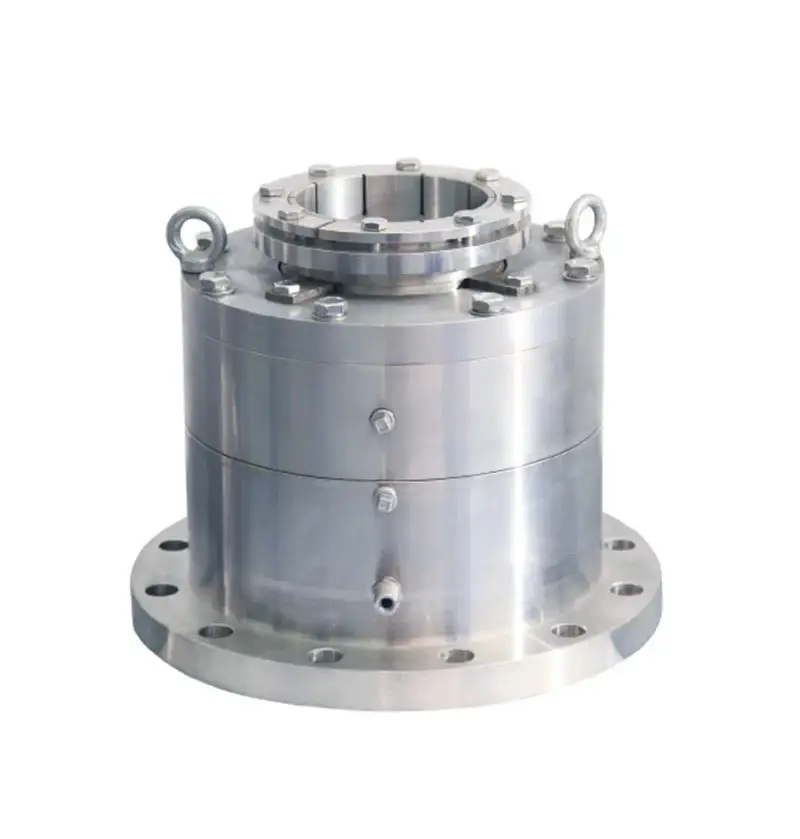
In industrial mixing and processing applications, maintaining equipment integrity while handling challenging fluids remains a critical engineering concern. Agitator seals serve as specialized mechanical sealing solutions designed specifically for rotating shafts in mixing vessels, reactors, and agitation equipment. These seals prevent process fluid leakage while accommodating the unique operational demands of agitation systems, including shaft deflection, vibration, and variable speed conditions. Understanding what agitator seals are and how they function provides essential insight for engineers, maintenance professionals, and plant operators responsible for ensuring reliable process containment and operational efficiency.

The complexity of agitator applications distinguishes them from standard pump or rotating equipment scenarios. Agitators typically operate with longer shaft overhangs, lower rotational speeds, and greater susceptibility to deflection and runout compared to centrifugal pumps. These characteristics create unique sealing challenges that require specialized mechanical seal designs with features not found in conventional sealing solutions. Agitator seals incorporate specific design elements such as flexible seal face mounting, robust secondary sealing systems, and accommodations for shaft movement that enable reliable performance in mixing environments where standard seals would fail prematurely.

WechatIMG21.jpg

Fundamental Definition and Purpose of Agitator Seals

Core Sealing Function in Mixing Applications

Agitator seals represent a category of mechanical seals engineered to address the specific containment requirements of rotating shaft assemblies in mixing vessels and reactors. Unlike static gaskets or packing materials, these dynamic sealing devices maintain a controlled seal interface between precisely lapped seal faces while the agitator shaft rotates. The primary purpose of agitator seals involves preventing process fluid from escaping the vessel along the shaft while simultaneously excluding atmospheric contaminants from entering the process environment. This dual containment function proves essential in applications handling hazardous chemicals, sterile pharmaceuticals, food-grade materials, or environmentally sensitive fluids where leakage cannot be tolerated.

The mechanical seal arrangement in agitator applications typically consists of a stationary seal component mounted in the vessel or stuffing box and a rotating component attached to the agitator shaft. These components create a sealing interface where two extremely flat, lapped faces contact each other under controlled pressure and lubrication conditions. The seal faces remain in close proximity or light contact during operation, with a microscopic fluid film providing lubrication and cooling while maintaining the seal barrier. This design principle allows agitator seals to accommodate continuous rotation while minimizing wear and maintaining effective containment throughout the equipment's operational cycle.

Distinction from Standard Mechanical Seals

While agitator seals share fundamental mechanical seal principles with pump seals, several critical distinctions define their specialized nature. Agitator shafts typically experience significantly more deflection and runout than pump shafts due to longer unsupported lengths, side-mounted impeller loads, and lower shaft stiffness. Standard mechanical seals designed for pump applications often cannot tolerate these movement patterns without experiencing premature seal face damage, excessive leakage, or complete failure. Agitator seals incorporate design features specifically engineered to accommodate shaft deflection, including flexible mounting arrangements, self-aligning capabilities, and seal face geometries that maintain proper contact even under dynamic shaft movement conditions.

The operational speed range further differentiates agitator seals from conventional pump sealing solutions. Most agitators operate at relatively low rotational speeds, typically ranging from 20 to 500 revolutions per minute, compared to pump speeds that often exceed 1,750 or 3,550 rpm. This lower speed operation changes the hydrodynamic conditions at the seal interface, affecting film thickness, heat generation, and wear patterns. Agitator seals utilize seal face materials, surface finishes, and geometry selections optimized for low-speed conditions where boundary lubrication and mixed-film regimes predominate rather than the full hydrodynamic separation more common in high-speed pump seal applications.

Critical Components and Assembly Architecture

A typical agitator seal assembly comprises several essential components working together to achieve reliable sealing performance. The rotating seal ring attaches to the agitator shaft through a drive mechanism, which may include drive pins, set screws, or drive collars depending on the specific seal design. This rotating component includes the primary seal face, typically manufactured from silicon carbide, tungsten carbide, or ceramic materials selected for wear resistance and chemical compatibility. The stationary seal component mounts in the seal housing or stuffing box, held in position by a gland plate or retainer system while maintaining the flexibility needed to accommodate shaft movement and maintain proper seal face alignment.

Secondary sealing elements provide static seals between the seal components and their respective mounting surfaces on the shaft and housing. These secondary seals, typically elastomeric O-rings or other shaped gaskets, must accommodate both static sealing requirements and the dynamic movement inherent in agitator applications. The seal assembly also includes spring elements, either coil springs, wave springs, or bellows-type springs, which maintain proper closing force between the seal faces throughout the operational envelope. This spring loading compensates for seal face wear, thermal expansion effects, and pressure variations, ensuring consistent seal face contact and containment performance across varying operational conditions encountered in mixing applications.

Operational Principles and Working Mechanisms

Seal Face Interface Dynamics

The core working principle of agitator seals centers on maintaining a controlled interface between two precision-lapped seal faces under conditions that balance leakage prevention with acceptable wear rates. When properly functioning, agitator seals operate with an extremely thin fluid film between the seal faces, typically measuring only a few micrometers in thickness. This fluid film originates from the process fluid being sealed and provides essential lubrication and cooling at the seal interface. The film thickness results from a balance of forces including hydraulic pressure attempting to separate the faces, spring closing force pushing the faces together, and hydrodynamic effects generated by rotation and seal face geometry that influence fluid behavior at the sealing interface.

During operation, the rotating seal face spins against the stationary face while this microscopic fluid film prevents metal-to-metal contact that would generate excessive heat and rapid wear. The seal faces must maintain parallel alignment despite shaft movement, vibration, and thermal expansion effects. Surface flatness specifications for agitator seals typically require deviations of less than two to three light bands of helium light, ensuring the faces conform closely enough to maintain the critical fluid film without allowing excessive leakage. The lapped surface finish, typically ranging from 5 to 10 microinches Ra, provides the smoothness necessary for proper film formation while accommodating the boundary lubrication conditions common in low-speed agitator applications.

Pressure Management and Face Loading

Agitator seals must manage hydraulic pressure differentials between the process side and the atmospheric side of the seal while maintaining appropriate face loading for reliable sealing. The seal design incorporates a balance diameter concept where the effective hydraulic area exposed to process pressure is carefully controlled through seal face geometry and secondary seal positioning. This balance ratio, typically ranging from 0.65 to 0.85 in agitator seal designs, determines how much of the process pressure contributes to opening forces that attempt to separate the seal faces. A properly balanced seal design ensures adequate face contact pressure to prevent leakage without creating excessive unit loading that would generate heat and accelerate wear at the low rotational speeds typical of agitator applications.

The spring system in agitator seals provides additional closing force independent of process pressure, ensuring positive seal face contact even during startup, shutdown, or low-pressure conditions. Multiple spring arrangements exist in agitator seal designs, including single large springs, multiple small springs distributed around the seal circumference, or wave spring configurations. Each spring arrangement offers specific advantages for accommodating shaft deflection, maintaining face alignment, and providing consistent closing force distribution. The spring force calculation must account for the operational pressure range, seal face area, desired face pressure, and expected wear patterns to ensure the seal maintains proper function throughout its service life in the specific agitation application.

Heat Generation and Thermal Management

All mechanical seals generate frictional heat at the seal face interface during operation, with the heat generation rate depending on seal face pressure, sliding velocity, friction coefficient, and lubrication conditions. In agitator seals, the relatively low rotational speeds typically result in moderate heat generation compared to high-speed pump applications, but thermal management remains critical for seal longevity. The process fluid flowing past the seal faces provides the primary cooling mechanism, carrying away generated heat and maintaining seal face temperatures within acceptable limits. Seal chamber design, flush configurations, and fluid circulation patterns significantly influence cooling effectiveness and thermal stability in agitator seal applications.

When operating conditions involve high viscosity fluids, poor fluid circulation, or elevated ambient temperatures, additional thermal management strategies may be required. Some agitator seal designs incorporate features such as increased seal face width to distribute heat generation over larger surface areas, specialized seal face geometries to enhance fluid pumping and cooling, or provision for external flush systems to introduce cooling fluid directly to the seal faces. Temperature monitoring through thermocouples or infrared sensors enables detection of abnormal thermal conditions before seal damage occurs. Proper thermal management ensures seal face materials remain within their operational temperature limits, maintaining mechanical properties and preventing thermal distortion that could compromise seal face flatness and sealing effectiveness.

Design Variations and Configuration Options

Single Versus Dual Seal Arrangements

Agitator seals are available in both single and dual seal configurations, with selection depending on process hazards, environmental regulations, and reliability requirements. Single agitator seals feature one seal interface between the process fluid and atmosphere, offering simpler installation, lower initial cost, and reduced maintenance complexity. These seals prove suitable for non-hazardous, non-toxic fluids where small amounts of leakage or emissions present minimal safety or environmental concerns. Single seals typically include provisions for leakage detection and containment through drain connections or collection systems that capture and manage any seal weepage occurring during normal operation or following seal face wear.

Dual agitator seals incorporate two seal faces in series, creating an intermediate chamber between the process and atmosphere. This chamber receives a barrier fluid or buffer gas that provides a secondary containment barrier and prevents process fluid from reaching the atmosphere even if the primary seal face experiences leakage. Dual seal configurations prove essential for hazardous chemicals, toxic materials, environmentally sensitive fluids, or processes where zero emissions requirements exist. The barrier fluid system may operate at higher pressure than the process, creating pressurized dual seals, or at lower pressure using unpressurized containment seals. Selection between these arrangements depends on process pressure levels, barrier fluid availability, and specific containment objectives for the application.

Cartridge Versus Component Seal Construction

Modern agitator seals often utilize cartridge construction where all seal components are preassembled on a sleeve or cartridge assembly before installation. This design approach simplifies installation by eliminating the need for technicians to measure and set seal component positions during mounting on the agitator shaft. Cartridge agitator seals arrive from the manufacturer as complete assemblies requiring only shaft diameter and basic stuffing box dimensions, with all internal settings, compressions, and adjustments preset at the factory. This construction reduces installation time, minimizes installation errors, and ensures consistent seal performance by eliminating field setting variations that could compromise seal operation.

Component agitator seals consist of individual parts that require assembly and setting during installation directly on the agitator shaft and within the stuffing box. While component seals demand greater installation expertise and careful dimensional measurement during mounting, they offer advantages in certain applications. Component construction enables easier seal face replacement without complete seal change-out, accommodates shaft size variations more readily, and often provides cost advantages for large seal sizes common in agitator applications. The selection between cartridge and component agitator seals typically considers factors including maintenance personnel skill levels, shaft access limitations, frequency of seal service, and total cost of ownership including both initial purchase price and long-term maintenance expenses.

Material Selection and Chemical Compatibility

Agitator seals must withstand chemical attack from process fluids while maintaining mechanical properties and sealing functionality throughout their service life. Seal face material combinations represent critical selection factors, with common pairings including silicon carbide versus silicon carbide, tungsten carbide versus silicon carbide, or carbon graphite versus ceramic. Each material combination offers specific advantages regarding hardness, wear resistance, thermal conductivity, chemical resistance, and cost. Silicon carbide provides excellent chemical resistance, good thermal properties, and adequate hardness for most agitator applications, making it a popular choice for both rotating and stationary seal faces in corrosive environments.

Secondary sealing elements and metal components require equally careful material selection based on chemical compatibility with the process fluid. Elastomers such as EPDM, Viton, Kalrez, or PTFE serve as secondary seal materials, with selection depending on temperature ranges, chemical exposure, and pressure conditions. Metal components including seal housings, spring elements, and hardware materials must resist corrosion from both the process fluid and any barrier fluids used in dual seal systems. Stainless steel grades, Hastelloy, titanium, or specialized alloys may be specified for wetted metal components depending on application severity. Comprehensive material compatibility analysis ensures all seal components maintain integrity and functionality throughout the expected service life in the specific chemical environment encountered in the mixing application.

Installation Considerations and Operational Requirements

Shaft Preparation and Dimensional Requirements

Proper agitator shaft preparation proves essential for achieving reliable seal performance and service life. The shaft surface contacting seal components, particularly the rotating seal face drive mechanism and secondary seal area, requires specific surface finish specifications, typically 32 microinches Ra or smoother. Surface roughness beyond these limits can damage elastomeric seal elements, create leak paths past secondary seals, or cause premature wear of seal face drive mechanisms. The shaft must be free from corrosion, pitting, scratches, and mechanical damage in the seal installation area. Any surface defects require correction through polishing, machining, or shaft repair procedures before installing agitator seals.

Shaft runout and perpendicularity specifications significantly impact seal face alignment and wear patterns in agitator applications. Total indicated runout at the seal face location should typically not exceed 0.005 inches, though specific seal designs may tolerate different values depending on seal face loading and flexibility provisions. Shaft perpendicularity relative to the stuffing box face affects seal housing alignment and can create uneven face loading if excessive. Many agitator seal failures traced to premature seal face wear or leakage ultimately result from shaft condition issues rather than seal design inadequacies. Comprehensive shaft inspection and measurement before seal installation prevents avoidable seal problems and ensures proper foundation for reliable sealing performance.

Stuffing Box Design and Flush Arrangements

The stuffing box or seal chamber provides the mounting cavity for stationary seal components and influences seal environment conditions through its dimensional characteristics and provision for fluid circulation. Adequate stuffing box depth accommodates the seal assembly with sufficient clearance for installation and removal while preventing seal component interference with vessel internals. The stuffing box bore diameter determines seal housing fit and influences seal cooling effectiveness through control of fluid circulation patterns. Proper seal chamber design includes provisions for flush connections, drain ports, and instrumentation access as required for the specific agitator seal configuration and monitoring requirements.

Flush plans define the fluid circulation arrangements that provide cooling, lubrication, and environment control for agitator seals. Simple flush systems circulate process fluid from the vessel through the seal chamber, relying on natural circulation driven by agitator pumping action or temperature differences. More sophisticated arrangements include external flush connections that introduce clean, cool fluid to the seal faces from external sources, providing enhanced cooling and preventing solid particle accumulation in the seal chamber. Quench systems deliver steam or liquid to the atmospheric side of single seals, providing visible indication of seal condition and preventing atmospheric moisture or process material accumulation. Dual seal systems require barrier fluid circulation systems with reservoirs, heat exchangers, and monitoring equipment to maintain proper barrier fluid conditions and provide secondary containment functionality.

Startup Procedures and Operational Monitoring

Proper startup procedures significantly influence initial seal performance and long-term reliability in agitator applications. Before starting the agitator, operators should verify seal assembly installation completeness, ensure gland plate bolting achieves specified torque values, confirm flush connections are properly installed, and check that barrier fluid systems for dual seals contain adequate inventory at correct pressure levels. The vessel should be filled with process fluid before agitator operation to ensure seal faces receive immediate lubrication and cooling upon rotation. Dry running even briefly can generate sufficient heat to damage seal faces or secondary seals, creating immediate leakage and requiring premature seal replacement.

During initial operation, personnel should monitor seal temperature, leakage, and general performance indicators to confirm normal operation. Seal face temperatures typically stabilize within 30 to 60 minutes of startup, with normal operating temperatures depending on seal size, speed, pressure, and cooling effectiveness but generally remaining below 200°F for properly functioning agitator seals. Unusual noise, vibration, or visible leakage during startup indicates potential installation problems or seal damage requiring immediate investigation. Ongoing operational monitoring through temperature sensors, leakage detection systems, or visual inspections enables early detection of seal deterioration before complete failure occurs, supporting predictive maintenance programs and minimizing unplanned downtime associated with unexpected seal failures in critical mixing applications.

Common Failure Modes and Preventive Strategies

Seal Face Wear Patterns and Causes

Seal face wear represents the most common degradation mechanism in agitator seals, with wear patterns providing diagnostic information about operating conditions and potential problems. Uniform circumferential wear indicates normal seal operation with even face contact pressure and proper lubrication, representing expected gradual deterioration over the seal service life. Non-uniform or localized wear patterns suggest alignment problems, shaft runout issues, thermal distortion, or face contamination from process solids. Excessive wear rates beyond predicted service life expectations often result from inadequate lubrication due to dry running, poor flush circulation, or operation with incompatible fluids that fail to provide proper seal face lubrication.

Abrasive wear accelerates seal degradation in applications handling fluids containing solid particles, crystals, or polymerization byproducts. These particles enter the seal face interface, creating mechanical scoring and rapid face deterioration. Prevention strategies include improved filtration systems, flush plans that introduce clean fluid to seal faces, and seal face material selections with enhanced abrasion resistance. Corrosive or erosive wear from aggressive chemicals requires attention to seal face material chemical compatibility and consideration of upgraded materials such as silicon carbide or tungsten carbide with superior corrosion resistance. Understanding the specific wear mechanisms affecting agitator seals in particular applications enables targeted improvement strategies that extend seal service life and improve overall equipment reliability.

Secondary Seal Failures and Elastomer Issues

While seal faces typically receive primary attention in mechanical seal discussions, secondary seal failures account for significant proportions of agitator seal leakage incidents. O-rings and other elastomeric sealing elements can fail through chemical attack, thermal degradation, compression set, or mechanical damage during installation. Chemical incompatibility between the elastomer material and process fluid causes swelling, softening, or embrittlement that destroys sealing capability. Temperature conditions exceeding elastomer limits accelerate degradation through thermal aging mechanisms that reduce elasticity and create permanent deformation. Secondary seal groove design inadequacies, including insufficient compression or excessive clearances, contribute to seal element extrusion or rolling failures that create leak paths.

Preventing secondary seal failures requires careful elastomer material selection based on comprehensive chemical and thermal compatibility analysis. Common secondary seal materials like Buna-N, EPDM, and Viton serve many applications effectively but possess distinct limitations regarding chemical resistance and temperature capability. Specialty elastomers such as Kalrez, Chemraz, or PTFE-based designs provide enhanced chemical resistance for severe applications involving aggressive solvents, acids, or high-temperature conditions. Installation procedures significantly impact secondary seal reliability, with proper lubrication, compression measurement, and anti-extrusion backup ring usage preventing mechanical damage during assembly. Regular inspection of secondary seal condition during maintenance activities enables early detection of chemical attack or degradation before complete failure occurs.

Maintenance Programs and Life Extension Practices

Implementing structured maintenance programs specifically addressing agitator seal requirements improves reliability and optimizes seal life cycle economics. Predictive maintenance approaches utilize temperature monitoring, vibration analysis, and periodic visual inspections to assess seal condition and identify deterioration trends before failure occurs. Establishing baseline performance parameters during commissioning provides reference points for evaluating subsequent condition assessment data and detecting abnormal trends indicating developing problems. Many facilities implement seal failure tracking systems that document failure modes, service life achievements, and operating conditions for each seal application, building institutional knowledge that guides seal selection improvements and operational optimization.

Preventive maintenance activities include periodic shaft inspection and surface conditioning to maintain proper mounting surfaces for seal components, stuffing box cleaning to remove deposits or contamination affecting seal environment, and flush system inspection to verify proper circulation and cooling effectiveness. Establishing appropriate seal change-out intervals based on historical performance data and process criticality prevents unexpected failures while maximizing seal utilization before replacement. Many operations maintain seal rebuild capabilities or vendor relationships supporting seal face replacement and component refurbishment, extending asset life and reducing total seal life cycle costs. Proper spare parts inventory management ensures critical seal assemblies remain available for emergency replacement while balancing inventory carrying costs against potential production losses from seal-related downtime in agitation equipment.

FAQ

What is the typical service life expectation for agitator seals in industrial applications?

Service life for agitator seals varies considerably depending on application conditions including process fluid properties, operating temperature and pressure, agitator speed, shaft runout conditions, and maintenance practices. In well-designed applications with compatible seal selection and proper operating conditions, agitator seals commonly achieve 2 to 5 years of service life. More demanding applications involving abrasive fluids, high temperatures, or severe chemical environments may experience shorter life spans of 6 to 18 months. Conversely, ideal conditions with clean fluids, moderate temperatures, and excellent maintenance can produce seal life exceeding 5 years. Specific life expectancy should be evaluated based on individual application characteristics and historical performance data from similar services.

Can agitator seals handle shaft deflection and runout in mixing applications?

Agitator seals are specifically designed to accommodate greater shaft movement than standard pump mechanical seals, but limitations exist. Most agitator seal designs tolerate total shaft runout of 0.005 to 0.010 inches depending on seal size and specific design features. Specialized designs with enhanced flexibility provisions can accommodate higher runout values up to 0.020 inches in extreme cases. However, shaft deflection and runout should be minimized through proper agitator shaft design, bearing arrangements, and equipment installation practices rather than relying entirely on seal accommodation capabilities. Excessive shaft movement accelerates seal face wear, creates uneven contact patterns, and reduces overall seal reliability even when within nominal tolerance limits. Proper shaft condition represents a prerequisite for optimal seal performance rather than a variable the seal is expected to fully compensate for.

How do agitator seals differ from pump seals in terms of maintenance requirements?

While both seal types require similar fundamental maintenance attention, agitator seals present distinct considerations. Agitator seals typically require more careful shaft condition monitoring due to the greater deflection and runout potential in mixing equipment. Stuffing box inspection and cleaning assume greater importance because many agitators handle fluids prone to crystallization, polymerization, or solid accumulation that can affect seal environment conditions. Agitator seal installations often require more complex support systems including flush circulation arrangements, barrier fluid systems for dual seals, and temperature monitoring equipment compared to simple pump applications. However, the lower rotational speeds of agitators generally produce less severe operating conditions and more gradual seal degradation, potentially allowing longer intervals between condition assessments compared to high-speed pump seals. Maintenance programs should be specifically tailored to agitator seal requirements rather than simply extending pump seal practices to mixing applications.

Are agitator seals suitable for applications with high viscosity fluids or slurries?

Agitator seals can successfully operate in high viscosity and slurry applications with appropriate seal selection, design features, and support systems. High viscosity fluids create challenges including reduced cooling effectiveness, difficulty maintaining seal face lubrication, and potential for heat generation due to increased friction. These conditions require seal designs with features such as wider seal faces to distribute heat generation, specialized flush arrangements to introduce lower viscosity cooling fluid to seal faces, and face materials selected for low friction coefficients. Slurry applications containing solid particles require attention to seal face material abrasion resistance, consideration of exclusion devices preventing solid accumulation in seal chambers, and potentially dual seal arrangements with clean barrier fluid protecting seal faces from direct slurry contact. While high viscosity and slurry services represent more challenging conditions, properly engineered agitator seal systems regularly achieve satisfactory performance in these demanding applications across chemical processing, mining, wastewater treatment, and other industries.