 EN
EN


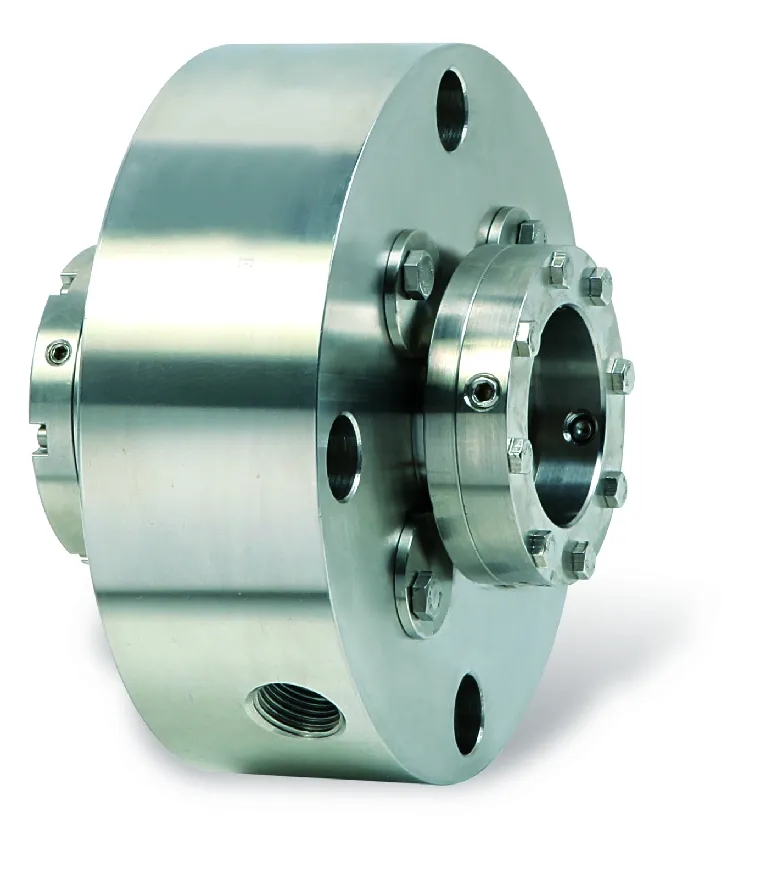
How Fluid Properties Dictate Mechanical Seal Design
Lubricity, Vapor Pressure, and Volatility: Why Water, Hydrocarbons, and Aggressive Chemicals Demand Fundamentally Different Seal Architectures
Fluid properties directly govern mechanical seal architecture—dictating face materials, loading strategy, containment method, and secondary seal selection. Hydrocarbons exhibit low lubricity, increasing frictional heat and wear; they require hard, smooth faces (e.g., silicon carbide vs. carbon) and often balanced or dual-seal arrangements to maintain stable hydrodynamic films. In contrast, water provides higher lubricity but poses vapor pressure risks: at elevated temperatures or low system pressures, localized flashing can interrupt film formation and cause dry running. Volatile fluids like propane or light naphthas demand pressurized dual seals to suppress phase change at the interface—unpressurized single seals risk catastrophic vapor lock and face separation.
Aggressive chemicals necessitate chemically inert face and elastomer materials—silicon carbide faces paired with perfluoroelastomer (FFPM) secondary seals, for example—while abrasive slurries call for hardened, erosion-resistant faces such as tungsten carbide. Vapor pressure and volatility also influence seal balance ratio: low-viscosity, high-volatility solvents require tighter face control and lower spring loads to minimize micro-leakage through interfacial gaps. Elastomer compatibility is equally fluid-dependent—PTFE resists hydrocarbons but swells in ketones; EPDM performs well in water and steam but degrades rapidly in oils. These interdependent fluid characteristics must be evaluated holistically—not in isolation—to prevent premature failure in critical service.
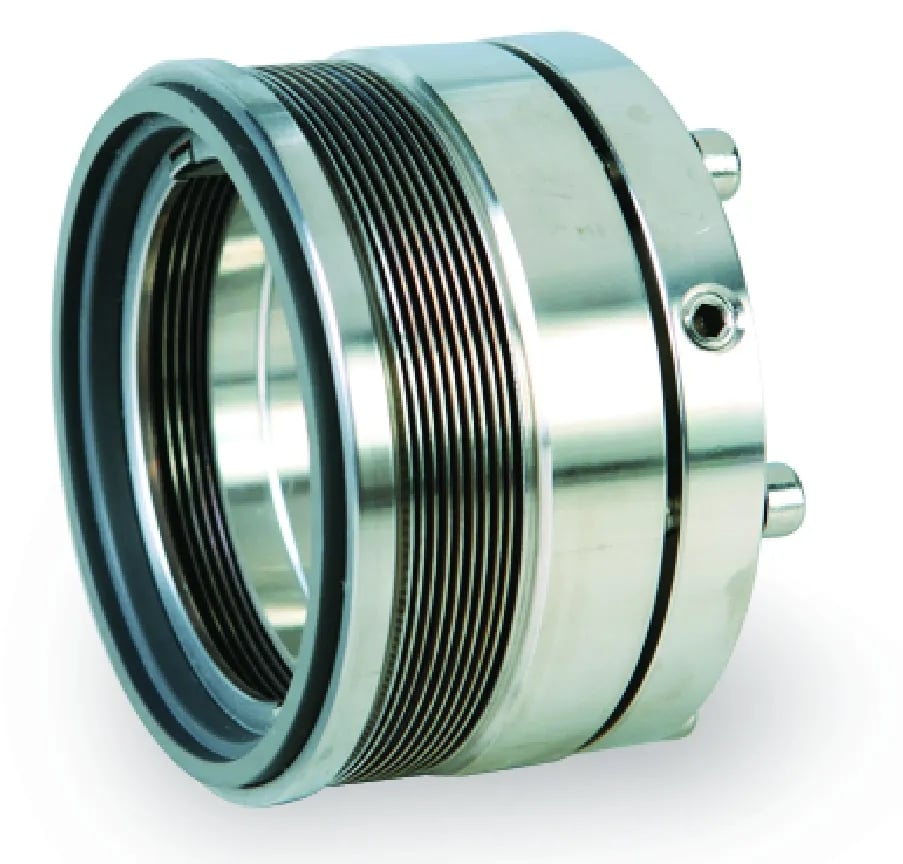
The Critical Role of Process Temperature and Pressure in Face Stability and Secondary Seal Integrity
Temperature and pressure define the operational envelope within which mechanical seals must remain dimensionally stable, dynamically responsive, and chemically intact. High temperatures accelerate elastomer aging, reduce O-ring resilience, and induce thermal distortion in mismatched face materials. Thermal shock—such as rapid startup or process upsets—can fracture brittle ceramics like alumina or silicon nitride. Conversely, low temperatures stiffen elastomers, impairing dynamic tracking and increasing the risk of leakage during shaft movement.
Pressure imbalances distort seal faces, especially in unbalanced designs, opening micro-gaps that permit leakage or vaporization. Above 50 bar, balanced configurations are essential to limit face load and preserve film integrity. Pressure cycling fatigues metallic bellows and accelerates elastomer compression set. Thermal conductivity disparities between mating faces compound these effects: silicon carbide’s high conductivity (≈120 W/m·K) minimizes thermoelastic distortion compared to tungsten carbide (≈60 W/m·K) or carbon (≈10–20 W/m·K), making it preferable for high-speed, high-heat applications.
Secondary seal performance hinges on temperature- and pressure-compatible material selection. FKM elastomers retain flexibility up to 230°C but harden above that threshold; EPDM excels below 150°C in aqueous services but fails catastrophically in hydrocarbons. FFPM extends the upper limit to 300°C with broad chemical resistance, while PTFE—though chemically inert—requires spring-energized or encapsulated designs to compensate for cold flow and lack of elasticity. Extrusion gaps must be sized to prevent O-ring deformation under maximum system pressure, particularly in high-pressure, high-temperature combinations common in oil and gas services.
| Material | Max Continuous Temp | Pressure Limit |
|---|---|---|
| FKM Elastomers | 230°C | 30 bar |
| PTFE | 260°C | 40 bar |
| EPDM | 150°C | 20 bar |
| FFPM | 300°C | 50 bar |
Material Selection for Mechanical Seals Across Industries
Face Materials: Silicon Carbide vs. Tungsten Carbide vs. Carbon — Matching Hardness, Thermal Conductivity, and Corrosion Resistance to Service Conditions
The seal face pair bears the brunt of mechanical, thermal, and chemical stress—and material selection is rarely interchangeable across applications. Silicon carbide offers exceptional hardness, outstanding thermal conductivity, and broad corrosion resistance, making it ideal for high-speed, high-temperature, or mildly abrasive services—including clean hydrocarbons and hot water. Its thermal stability minimizes distortion during transient conditions, supporting reliable film formation.
Tungsten carbide provides superior toughness and abrasion resistance—critical in slurry or sand-laden services—but suffers from poor acid resistance. Exposure to strong acids (e.g., sulfuric or hydrochloric) can silently corrode the cobalt binder, leading to sudden face disintegration. Its moderate thermal conductivity requires careful attention to heat dissipation in high-RPM pumps.
Carbon graphite, though softer and thermally insulating, delivers excellent self-lubrication and unmatched chemical inertness—making it the default choice for water, light hydrocarbons, and aggressive oxidizers where low friction and corrosion resistance outweigh wear concerns. However, its low thermal conductivity and coefficient of thermal expansion (CTE) mismatch with harder counterfaces (e.g., silicon carbide) can induce uneven loading during thermal transients—especially at startup—requiring precise interference fits and controlled ramp-up protocols.
A carbon/silicon carbide combination remains the most widely adopted pairing for general-purpose pumps, balancing cost, longevity, and reliability. But in demanding environments—such as mining dewatering or caustic chemical transfer—the optimal choice emerges only when hardness, CTE, thermal conductivity, and corrosion resistance are jointly evaluated against the full process profile.
Elastomers and Polymers: FKM, EPDM, FFPM, and PTFE Variants — Chemical Compatibility Charts and Real-World Failure Triggers
Secondary seals—O-rings, gaskets, and bellows—rely on elastomeric or polymeric resilience to maintain sealing force across thermal cycles, pressure fluctuations, and chemical exposure. Their failure is often the first visible sign of incompatibility, yet root causes are rarely singular.
FKM (Viton®) delivers robust resistance to hydrocarbons, aliphatic/aromatic solvents, and strong acids up to 230°C—but degrades rapidly in hot water, steam, or glycol-based brake fluids due to hydrolysis. EPDM excels in water, steam, and dilute alkalis, yet swells and loses tensile strength within hours when exposed to even trace hydrocarbon vapors—a frequent cause of binding and face wear in improperly specified wastewater booster pumps. FFPM (e.g., Kalrez®, Chemraz®) offers near-universal chemical resistance and thermal stability up to 325°C, justifying its use in high-value, high-risk applications such as chlorinated solvent transfer or concentrated sulfuric acid service. PTFE variants provide ultimate chemical inertness and low friction but lack inherent elasticity; unsupported PTFE extrudes under pressure unless reinforced with stainless steel springs or fully encapsulated in elastomer jackets.
Real-world failures stem less from static immersion data than from dynamic service realities: intermittent chemical exposure during cleaning cycles, thermal cycling that accelerates compression set, or pressure surges that exceed extrusion gap limits. A seal may pass a 72-hour immersion test in xylene yet fail within days when subjected to cyclic heating and vibration. Therefore, engineers must consult supplier-published compatibility charts in context—cross-referencing not just the primary process fluid, but also flush media, barrier fluids, cleaning agents, and upset conditions—to avoid repeat failures and unplanned emissions.
Industry-Specific Mechanical Seal Configurations and Standards
Mechanical seals are engineered to industry-specific risk profiles—not generic performance metrics. In oil and gas, API 682 is the de facto global standard, defining seal types (Arrangements 1, 2, and 3), qualification testing, materials approval, and support system requirements for hydrocarbon service. Its rigorous framework ensures reliability in high-pressure, high-temperature, and flammable environments—mandating features like containment monitoring, barrier fluid systems, and fire-safe construction.
Chemical processing aligns closely with API 682 but emphasizes extended material compatibility, reflected in ISO 21049 (the international adoption of API 682). Here, seal specifications routinely include enhanced corrosion allowances, dual-phase barrier fluids, and FFPM or PTFE-based secondary seals—even when operating at moderate pressures—because chemical attack is often insidious and non-negotiable.
Water and wastewater applications follow manufacturer-specific or ANSI/HI guidelines rather than prescriptive standards. Designs prioritize ease of maintenance, tolerance to grit and biofilm, and cost-effective materials—often using carbon/silicon carbide faces with EPDM or FKM elastomers. In pharmaceutical and food-grade services, FDA 21 CFR 177.2430 and USP Class VI compliance govern all wetted polymers, requiring extractables testing and non-toxic, non-leaching formulations—often driving use of PTFE-encapsulated O-rings and electropolished stainless hardware.
Selecting the right seal means starting not with part numbers, but with the governing standard—and verifying that every design decision—from balance ratio to elastomer grade—meets its functional and regulatory intent.
FAQ
What are the main factors affecting mechanical seal design?
Mechanical seal design is influenced by fluid properties (lubricity, vapor pressure, volatility), process temperature, pressure, and material compatibility. Each factor must be evaluated to ensure dimensional stability, chemical resistance, and functional performance under service conditions.
Why is material selection critical in mechanical seals?
Material selection is crucial because it ensures the mechanical seal performs adequately under specific operating conditions. For example, silicon carbide offers exceptional thermal conductivity and hardness, while tungsten carbide provides toughness, and carbon is excellent for chemically aggressive or self-lubricating services.
What are common challenges with elastomers in mechanical seals?
Elastomers face challenges such as chemical incompatibility, thermal aging, and pressure-induced extrusion. Selecting the right elastomer—like FKM for hydrocarbons or EPDM for aqueous services—is critical to avoid premature failure.
What standards govern mechanical seals in the oil and gas industry?
The oil and gas industry follows API 682, a global standard outlining design types, material requirements, and qualification tests for mechanical seals in high-pressure and high-temperature hydrocarbon environments.
What makes dual seals necessary for volatile fluids?
Dual seals are essential for volatile fluids to prevent phase changes at the interface, which can otherwise lead to catastrophic vapor lock, face separation, and seal failure.