 EN
EN


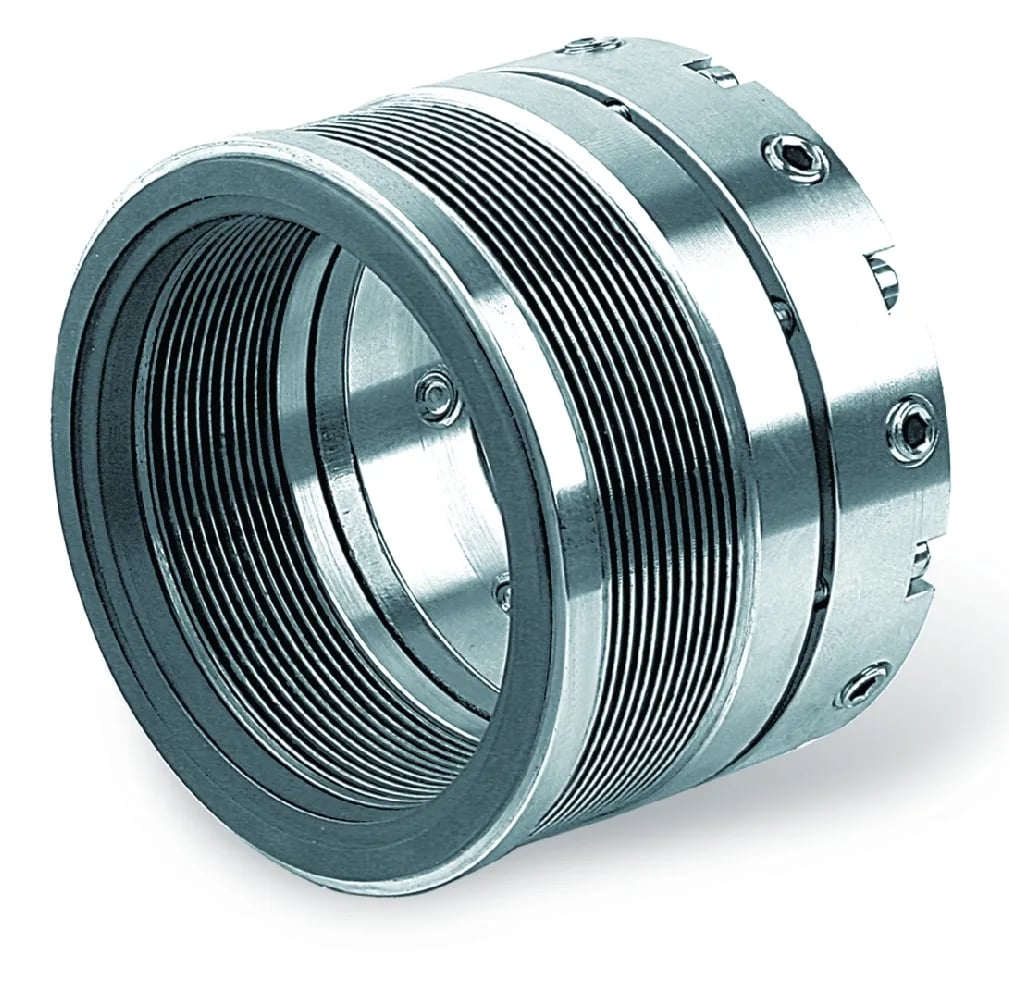
The Critical Role of Slurry Seals in Abrasive Industrial Applications
How erosion-corrosion compromises seal integrity in high-solids environments
In high-solids process streams, erosion-corrosion — the synergistic degradation caused by abrasive particles and chemically aggressive media — is the primary failure mechanism for rotary seals. Hard solids like silica, ore fines, or mineral grit micro-gouge seal faces during operation, disrupting the ultra-precise flatness (<0.5 µm) required to sustain a stable hydrodynamic fluid film. Once compromised, increased asperity contact raises frictional heat, accelerating material loss and widening leakage paths. In mining transfer pumps handling tailings at 25–30% solids, wear rates can be 10–20× higher than in clean water service. Without ultra-hard, corrosion-resistant face materials — such as tungsten carbide or reaction-bonded silicon carbide — seal life often collapses from months to weeks.
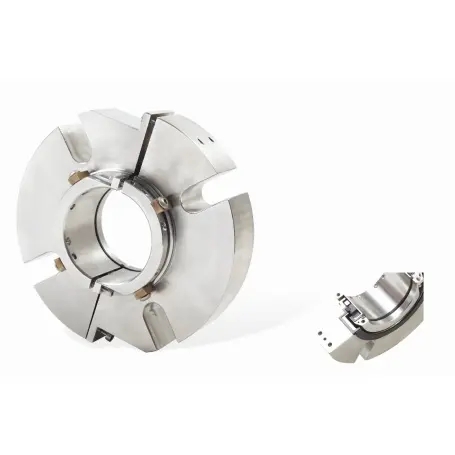
Consequences of slurry seal failure: leakage, shaft damage, and operational downtime
Slurry seal failure initiates immediate product leakage, triggering environmental reporting obligations and potential regulatory penalties. More critically, leaking abrasive fluid migrates along the shaft, rapidly eroding the shaft sleeve and, in severe cases, the shaft itself. Repairing a scored shaft typically requires 48–72 hours of unplanned downtime and tens of thousands of dollars in machining and replacement costs. Solids bypassing the seal also infiltrate bearing housings, causing premature bearing failure and, in extreme cases, rotor seizure. Across heavy industry, slurry-related seal failures account for 30–40% of all mechanical seal maintenance events. For a single dewatering pump in a copper concentrator, each hour of lost production represents approximately $5,000 in opportunity cost — underscoring how seal reliability directly impacts plant profitability.
Optimizing Slurry Seal Performance in Mining Operations
Case evidence: Dual-cartridge slurry seals in copper ore dewatering (42% solids, Chile)
A Chilean copper concentrator processing dense 42% solid-content ore slurries deployed dual-cartridge slurry seals with tungsten carbide faces and integrated secondary containment barriers. This design counters abrasive particle ingress through redundant sealing layers and hardened contact surfaces. Over 14 months of continuous operation — despite pH fluctuations and silica concentrations exceeding 85,000 ppm — no seal failure occurred. Crucially, the system eliminated process leakage and prevented shaft scoring, a critical advantage in acidic mineral slurries where corrosion proceeds at triple the rate observed in neutral water, per NACE standards.
Quantified reliability gain: 68% reduction in seal replacement frequency
Adopting engineered slurry seals reduced seal replacements by 68%, driven by three interdependent improvements:
- Elastomers formulated to resist chemical swelling in cyanide-laden environments
- Precision-machined faces maintaining <0.5 micron flatness under thermal cycling
- Advanced flush systems that actively prevent particle accumulation in seal chambers
This reliability uplift delivered 300 fewer annual downtime hours and an estimated $740,000 in recovered production value, demonstrating how purpose-built slurry seals transform maintenance economics in heavy-solids applications.
Tailoring Slurry Seals for Municipal and Industrial Wastewater Systems
Wastewater treatment plants and industrial facilities handling influent with high solids content require specialized sealing solutions. Standard mechanical seals rapidly degrade when exposed to fibrous debris and grit, resulting in frequent failures and costly operational interruptions.
Design adaptations for fibrous, grit-laden influent: flush strategies and face geometry
Two core engineering adaptations mitigate these challenges: external flush systems and optimized seal face geometry. API Plan 32 — introducing a clean, compatible liquid at pressure exceeding the process fluid — is widely adopted to sweep solids away from the seal interface and back into the pump chamber. Its flow rate and pressure are calibrated to avoid process dilution or thermal shock. On the face side, wider seal faces made from ultra-hard materials (e.g., tungsten carbide or reaction-bonded silicon carbide) distribute wear more uniformly. Some designs integrate textured or grooved topographies to generate a hydrodynamic lift film, minimizing direct contact with abrasive particles. For high-grit applications, split-seal configurations paired with robust flush systems enable rapid replacement without full pump disassembly — cutting maintenance time significantly. Collectively, these adaptations extend seal life by multiples compared to standard designs.
Material and Configuration Selection for Heavy-Solids Transport Slurry Seals
Comparative analysis: tungsten carbide, silicon carbide, and thermoplastic composites
Material selection governs slurry seal longevity in systems where abrasive solids exceed 50% concentration. Tungsten carbide offers exceptional wear resistance but limited impact tolerance — a critical drawback in slurry pumps encountering rock fragments 25 mm. Silicon carbide matches its hardness while delivering superior corrosion resistance, making it ideal for acidic mining slurries; however, it remains vulnerable to thermal shock. Thermoplastic composites — such as PEEK-reinforced polymers — provide outstanding impact resilience for fluctuating-pressure environments, compensating for moderately lower wear resistance through elastic deformation. Field data shows carbide-faced seals deliver 3–5× longer service life than standard elastomer seals in continuous high-abrasion duty, while composite-based designs reduce unplanned downtime by 40% in systems with frequent start-stop cycles.
| Material | Wear Resistance | Impact Tolerance | Corrosion Resistance | Best Application Fit |
|---|---|---|---|---|
| Tungsten Carbide | Exceptional | Low | Moderate | Consistent high-solids flow |
| Silicon Carbide | Exceptional | Low | High | Acidic/corrosive slurries |
| Thermoplastic Composites | High | Exceptional | High | Variable-pressure systems |
FAQ
What are slurry seals used for?
Slurry seals are critical components in pumps and rotating equipment designed to handle high-solids media, protecting against leakage, erosion, and operational failures.
What materials are best suited for slurry seals?
Ultra-hard materials like tungsten carbide and silicon carbide are ideal due to their exceptional wear and corrosion resistance. Thermoplastic composites are recommended for systems with fluctuating pressures.
How can slurry seal performance be optimized?
The key optimizations include redundant sealing layers, hardened contact surfaces, external flush systems, and precision-machined faces to maintain hydrodynamic lift films.
Why do slurry seals fail?
Failures are primarily caused by erosion-corrosion from abrasive particles and chemically aggressive fluids, disrupting the seal face geometry and creating leakage paths.