 EN
EN


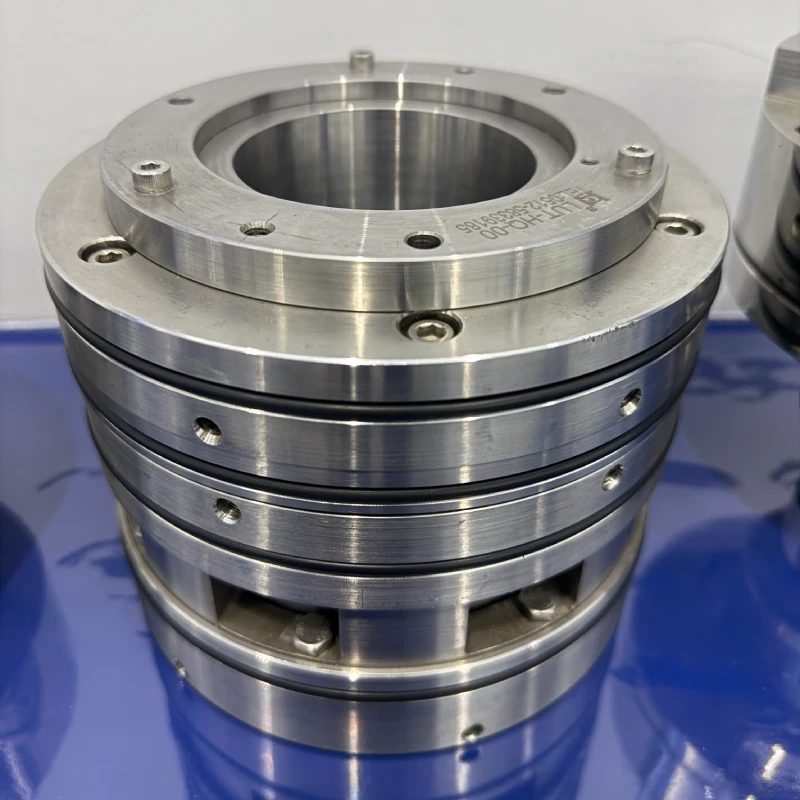
How Metal Bellows Withstand Thermal Cycling: Fatigue Life Fundamentals
Thermal Expansion Mismatch and Cyclic Strain Accumulation
Thermal cycling subjects metal bellows to repeated expansion and contraction, generating cyclic strain. When adjacent components expand at different rates—due to mismatched coefficients of thermal expansion—stress concentrates at geometric discontinuities such as welds, bends, or transitions. Over time, these localized stresses drive microscopic damage accumulation, initiating fatigue cracks. As outlined in the 2021 thermal fatigue management guide, fatigue resistance is governed primarily by geometry, material microstructure, and residual stress state. Compressive residual stresses (e.g., from shot peening or controlled welding) enhance longevity; tensile stresses near joints accelerate failure. Fine-grained metals impede crack nucleation but require precision manufacturing to avoid introducing new stress risers. Addressing these variables early in design—through FEA-informed geometry optimization, controlled heat treatment, and joint detailing—is essential for achieving target fatigue life.
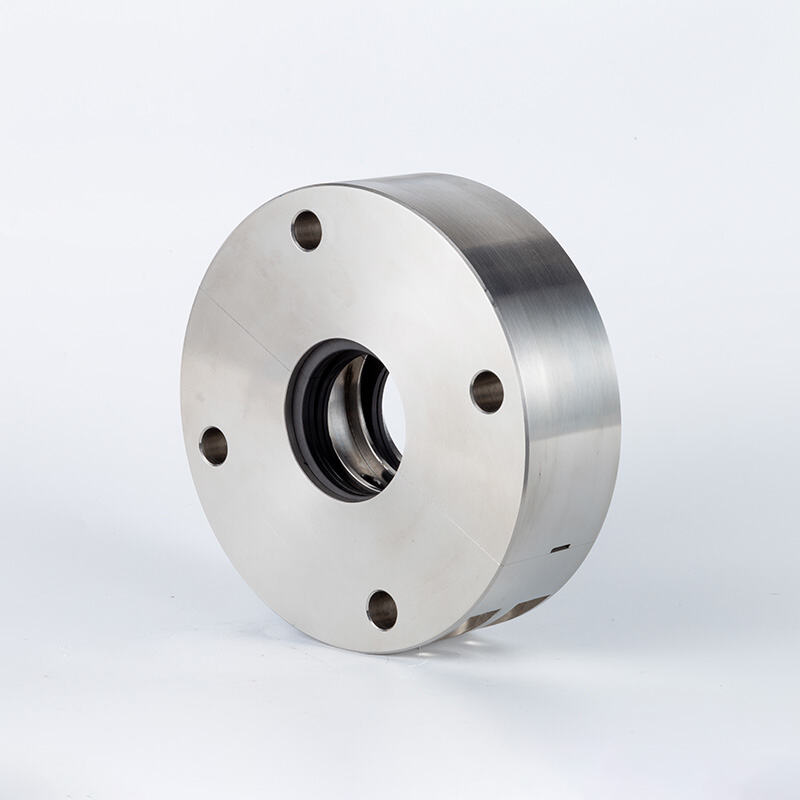
Empirical Fatigue Data: Inconel 718 vs. Hastelloy C-276 Under ±150°C Cycling
Material selection critically influences thermal fatigue performance. Comparative test data under ±150°C cycling reveals distinct behavior between two leading nickel-based alloys:
| Material | Cycles to Failure (±150°C) | Key Failure Mechanism | Grain Structure Impact |
|---|---|---|---|
| Inconel 718 | 85,000 | Crack propagation at welds | Coarse grains reduce creep sensitivity |
| Hastelloy C-276 | 120,000+ | Surface pitting initiation | Fine grains inhibit crack formation |
Hastelloy C-276’s superior performance stems from its chromium-molybdenum matrix, which provides exceptional oxidation resistance and a stable, fine-grained microstructure that resists strain localization at temperature extremes. It is the preferred choice for applications exceeding 10,000 annual thermal cycles—especially where combined thermal, mechanical, and corrosive loads prevail. Crucially, manufacturing quality determines real-world performance: machining marks, micro-cracks, or unrelieved weld residuals act as stress concentrators and can cut fatigue life by up to 50%, regardless of base material.
Metal Bellows Seal Performance in Corrosive Media: Compatibility and Failure Prevention
Chemical aggressors—including hydrochloric acid, sulfuric acid, sodium hydroxide, and oxidizing chlorides—rapidly degrade conventional seal materials. A metal bellows seal must resist pitting, crevice corrosion, and stress corrosion cracking across wide pH and temperature ranges. The table below summarizes proven compatibility for critical bellows and face materials in aggressive service:
| Environment | Compatible Bellows Material | Compatible Face Material | Key Concern |
|---|---|---|---|
| HCl (all conc.) | Hastelloy C-type alloys | Silicon carbide (SSiC) | Rapid pitting in 300-series SS |
| H₂SO₄ (dilute) | Nickel-chromium alloys (e.g., 718) | Tungsten carbide (Co binder) | Sulfide stress cracking |
| H₂SO₄ (conc.) | Hastelloy C / Inconel 718 | Silicon carbide / carbon | Oxidizing attack on carbon |
| NaOH (hot, conc.) | Stainless 316L or Inconel 718 | Silicon carbide | Caustic stress corrosion |
| Oxidizing chlorides (Cl₂, NaClO) | Hastelloy C-276 | Silicon carbide / tungsten carbide | Transgranular cracking in SS |
Selecting a compatible pair requires balancing hardness, thermal conductivity, and galvanic stability—not just individual material resistance. For example, Hastelloy C-276 retains 95% of its tensile strength after 1000 hours in 10% HCl at 80°C, outperforming standard 316L stainless steel by a factor of five. This durability translates directly to extended maintenance intervals and reduced unplanned downtime.
Secondary Seal Failures — Why Non-Elastomeric Solutions (Graphite, FKM/FFKM Hybrids) Are Essential
Even when the metal bellows and seal faces withstand corrosion, secondary seals—typically elastomeric O-rings or gaskets—often fail first. Conventional elastomers like NBR or standard FKM swell, harden, or embrittle in strong acids, caustics, and oxidizers, creating bypass leak paths that compromise the entire seal assembly.
Graphite-based gaskets offer a non-elastomeric alternative with near-universal chemical resistance and thermal stability up to 500°C—ideal for static flange joints. For dynamic applications requiring axial compliance, FKM/FFKM hybrid compounds combine the chemical inertness of perfluoroelastomers with enhanced low-temperature flexibility and compression set resistance. These engineered solutions eliminate the primary degradation modes of traditional elastomers, ensuring the full metal bellows seal system maintains integrity in the most demanding process environments—from chlorine dioxide scrubbers to hot concentrated caustic loops.
Advanced Material Selection for Metal Bellows in Harsh Environments
Inconel, Silicon Carbide, and Tungsten Carbide: Balancing Hardness, Thermal Conductivity, and Galvanic Stability
Optimal material selection for metal bellows in harsh environments hinges on three interdependent properties: hardness, thermal conductivity, and galvanic stability.
Nickel-chromium superalloys like Inconel maintain high yield strength above 700°C but exhibit relatively low thermal conductivity (~11 W/m·K), increasing the risk of steep thermal gradients during rapid cycling. Silicon carbide offers outstanding corrosion resistance against acids and oxidizing chlorides, with Vickers hardness 2500 HV—yet its brittleness demands careful stress management and avoidance of tensile loading. Tungsten carbide delivers superior wear and erosion resistance, with thermal conductivity up to 110 W/m·K—nearly three times that of stainless steel—making it highly effective for heat dissipation in high-pressure, high-velocity services.
Galvanic compatibility is equally critical: pairing silicon carbide (electrode potential ≈ –0.3 V) with passive alloys minimizes galvanic current in conductive electrolytes, whereas coupling dissimilar metals without insulation invites accelerated corrosion. In HCl service, silicon carbide’s electrochemical inertness outperforms all metallic options; in abrasive slurries, tungsten carbide’s compressive strength (6000 MPa) ensures long-term dimensional stability. Thermal expansion mismatch must also be managed—Inconel’s coefficient (14 µm/m·K) differs significantly from silicon carbide’s (4.5 µm/m·K), generating interfacial stresses during ΔT 200°C cycles. Ultimately, material strategy should align with dominant failure mechanisms: superalloys for stress corrosion cracking (SCC), passivating grades for pitting, and carbide-reinforced systems for erosion-dominated conditions.
FAQ
What factors influence metal bellows fatigue life during thermal cycling?
Thermal cycling fatigue life depends on stress concentrations, material microstructure, residual stress state, and geometric optimization during the design phase.
How do Hastelloy C-276 and Inconel 718 compare in thermal fatigue performance?
Hastelloy C-276 outperforms Inconel 718 with higher cycles to failure (120,000 vs. 85,000) due to its fine-grained microstructure and superior oxidation resistance.
What are common failure modes in metal bellows seals exposed to corrosive media?
Failure modes include pitting corrosion, stress corrosion cracking, crevice corrosion, and secondary seal degradation such as elastomer embrittlement.
Why are FKM/FFKM hybrids preferred for secondary seals?
They combine chemical resistance with low-temperature flexibility and compression set resistance, overcoming limitations of conventional elastomers like NBR or standard FKM.