 EN
EN


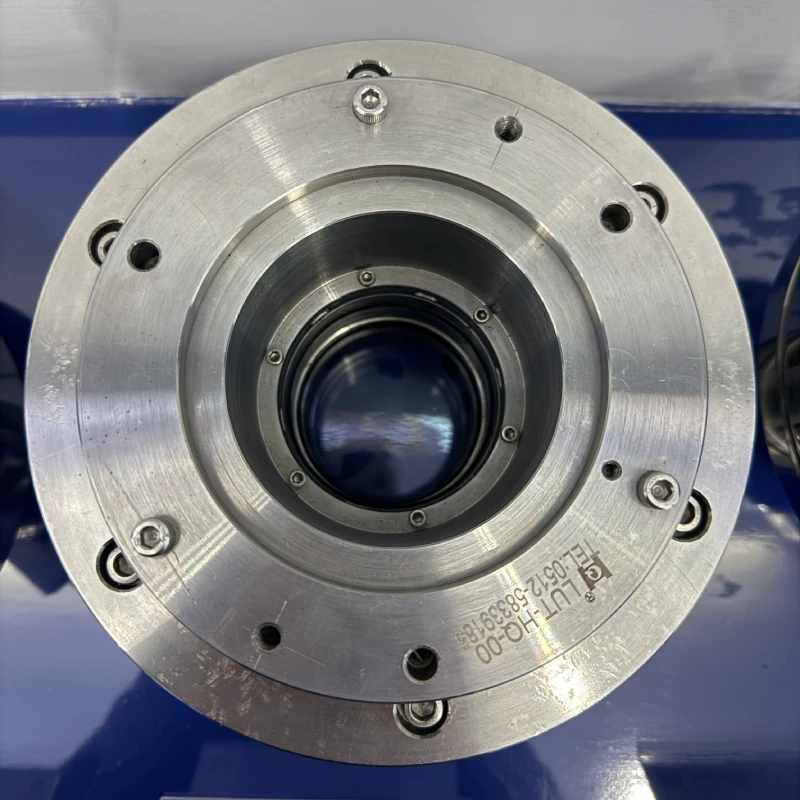
In industrial and mechanical applications, the quality of a sealing solution often determines the reliability of an entire system. While standard sealing products are widely available and serve basic containment needs, they frequently fall short in demanding environments where precision, durability, and performance under pressure are non-negotiable. This is precisely where hq seals stand apart, offering a fundamentally different approach to sealing technology that goes well beyond what conventional options can deliver.
Understanding what sets hq seals apart requires a close look at material engineering, design philosophy, performance criteria, and real-world application demands. The differences are not merely incremental — they reflect a deliberate commitment to engineering excellence that influences how industries approach fluid control, pressure management, and mechanical integrity. This article breaks down those distinctions in practical, decision-useful terms for engineers, procurement professionals, and operations managers who need to make informed sealing choices.
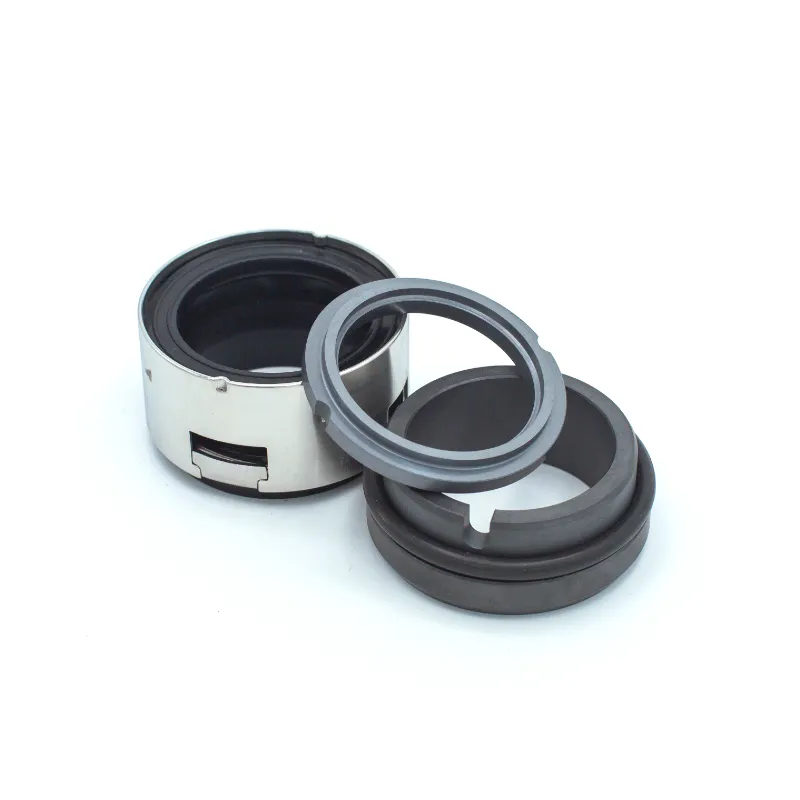
Material Engineering and Compound Superiority
Advanced Compound Formulation
One of the most significant distinguishing factors of hq seals lies in the compound formulations used during manufacturing. Standard sealing products often rely on general-purpose elastomers such as basic nitrile rubber or low-grade EPDM, which are cost-effective but limited in their chemical and thermal resistance. HQ seals, by contrast, are developed using carefully engineered compound blends that are optimized for specific operating conditions.
These advanced compounds are formulated to resist degradation from aggressive media including hydraulic fluids, lubricants, fuels, and industrial chemicals. The molecular structure of the elastomer is engineered to maintain dimensional stability under repeated compression and recovery cycles, which is critical for maintaining a reliable seal over time. This level of compound sophistication simply does not exist in generic sealing alternatives.
Furthermore, hq seals undergo rigorous batch testing to verify that the compound properties meet defined performance thresholds before any product reaches the production floor. This quality assurance layer adds a degree of consistency that standard sealing manufacturers rarely replicate at the same scale or depth.
Temperature and Chemical Resistance Range
Standard sealing products are typically rated for moderate temperature ranges and limited chemical compatibility. HQ seals are engineered to operate reliably across a significantly broader spectrum of conditions, from cryogenic environments to high-temperature industrial processes. This expanded operational window directly reduces the risk of seal failure in applications where temperature fluctuations are common.
Chemical compatibility is equally critical. Many standard seals experience swelling, hardening, or surface degradation when exposed to specific fluid types over extended periods. HQ seals are compound-matched to maintain their physical integrity when in contact with the actual media they will encounter in service, reducing unexpected failures and unplanned downtime.
For industries such as oil and gas, chemical processing, and food-grade manufacturing, this level of chemical and thermal engineering is not optional — it is a baseline requirement. HQ seals meet and often exceed these requirements in ways that standard sealing products cannot match.
Dimensional Precision and Manufacturing Tolerances
Tight Tolerance Control in Production
Precision is a defining characteristic of hq seals. During manufacturing, dimensional tolerances are held to extremely tight specifications, ensuring that each seal conforms accurately to the groove geometry and hardware it is designed to work with. Standard sealing products are often manufactured to broader dimensional tolerances, which introduces variability in cross-sectional diameter, inner diameter, and outer diameter measurements.
Even minor dimensional deviations can cause problems in precision assemblies. An oversized seal may generate excessive compression, leading to early fatigue and cracking. An undersized seal may fail to achieve proper contact pressure, resulting in leakage from the outset. HQ seals eliminate this variability through controlled production processes that maintain dimensional accuracy across every production batch.
This precision manufacturing approach also benefits installations that require consistent torque values and predictable assembly behavior. Technicians working with hq seals encounter far less variation during installation, which translates into faster assembly times and reduced risk of installation-related damage.
Surface Finish and Mold Quality
The surface condition of a seal directly influences how effectively it forms a leak-tight barrier. HQ seals are produced using high-quality tooling and molds that create a smooth, burr-free surface finish. Standard sealing products, particularly those manufactured in high-volume commodity runs, often exhibit parting line flash, surface roughness, or mold marks that compromise the sealing interface.
A clean surface finish on hq seals means that the sealing lip or contact face achieves intimate contact with the mating hardware. This reduces the chance of leak paths developing at the sealing interface and improves the overall reliability of the assembly in both static and dynamic applications.
Mold quality also determines how well the internal geometry of a seal — such as spring grooves, backup lip profiles, and edge radii — is reproduced. HQ seals benefit from precision tooling that faithfully reproduces these functional features, ensuring the seal performs as designed rather than as a compromised approximation.
Design Features Built for Performance
Engineered Geometry for Load Distribution
Beyond materials and dimensions, hq seals are distinguished by thoughtful design geometry that addresses the mechanical realities of sealing under dynamic and static conditions. Standard sealing designs often use simplified cross-sections that generate point contact or uneven load distribution across the sealing interface. This can lead to stress concentrations that accelerate wear and shorten service life.
HQ seals are engineered with optimized cross-sectional profiles that distribute contact load more evenly. This geometry reduces localized stress, prevents extrusion under high pressure, and maintains consistent sealing force throughout the operational life of the component. The result is a seal that performs predictably rather than degrading unpredictably over time.
In dynamic applications such as hydraulic cylinders, rotary shafts, and reciprocating pistons, this load distribution advantage becomes even more important. HQ seals are specifically designed to accommodate the motion-induced forces that would otherwise cause rapid wear in a standard sealing product with a simpler geometry.
Pressure and Extrusion Resistance
Operating pressure is one of the most demanding variables in industrial sealing. Standard seals often require the addition of backup rings or support elements to function at elevated pressures, adding complexity and cost to the assembly. HQ seals are engineered to resist extrusion and pressure-induced deformation more effectively through both compound hardness selection and geometric design.
The compound Shore hardness values selected for hq seals are carefully balanced to provide both elasticity for effective sealing and stiffness for resisting extrusion under pressure spikes. This balance is achieved through material science expertise rather than generic hardness specifications applied uniformly across all applications.
Additionally, the edge geometry of hq seals is designed to resist nibbling and extrusion at the clearance gap between mating components. This is particularly valuable in hydraulic and pneumatic systems where pressure cycling and gap variations are inherent to the application. Standard sealing products frequently fail at this point, while hq seals are engineered to outlast these conditions.
Application Suitability and Technical Support
Matching Seals to Specific Operating Conditions
A key differentiator in the value proposition of hq seals is the application engineering that accompanies the product offering. Standard sealing suppliers typically offer catalog products with general-purpose specifications and leave the selection decision entirely to the buyer. HQ seals are backed by technical resources that help match seal design, compound, and dimensional specifications to the actual conditions of the application.
This application-matching process considers factors such as operating pressure, temperature range, fluid media, shaft speed in dynamic applications, housing tolerances, and installation constraints. The result is a seal selection that is genuinely optimized for the application rather than a generic choice that may work adequately under normal conditions but fail when conditions become challenging.
For OEM manufacturers, this level of application support is particularly valuable during product development. Specifying hq seals early in the design phase ensures that the sealing solution is integrated correctly into the design rather than retrofitted after problems arise in the field.
Consistency Across Batches and Long-Term Supply
Reliability in sealing is not just about individual product performance — it is also about consistency across production batches over time. Standard sealing suppliers often source elastomers from multiple compound suppliers, introducing variation in hardness, elongation, and compression set properties from one batch to the next. HQ seals are produced with controlled material sourcing and compound management practices that maintain property consistency across batches.
For maintenance and service operations, this batch consistency means that replacement hq seals behave identically to the original installation. Technicians can rely on predictable installation behavior, compression characteristics, and service life estimates regardless of when the replacement seal was manufactured.
Long-term supply reliability is also a consideration for industrial buyers managing inventory and supply chain risk. HQ seals are supported by production infrastructure designed for sustained supply of specific product variants, reducing the risk of specification changes or discontinuation that can disrupt maintenance programs.
FAQ
What applications are hq seals most commonly used in?
HQ seals are used across a wide range of industrial applications including hydraulic cylinders, pneumatic systems, rotary shaft assemblies, pump and valve bodies, and fluid power equipment. Their precise dimensions and engineered compounds make them particularly suitable for applications where reliability under variable pressure, temperature, or chemical exposure is required.
How do hq seals perform compared to standard sealing in high-pressure environments?
In high-pressure environments, hq seals outperform standard sealing solutions due to their extrusion-resistant geometry and carefully selected compound hardness. Standard seals often require backup rings to function at elevated pressures, while hq seals are engineered to handle pressure demands with reduced reliance on supplementary components, simplifying the assembly and improving long-term reliability.
Can hq seals be used as direct replacements for standard sealing products?
In many cases, hq seals can serve as direct dimensional replacements for standard sealing products, provided the groove dimensions and hardware specifications match. However, the improved material properties and tighter manufacturing tolerances of hq seals often mean that the installation must be evaluated to ensure the groove and clearance geometry is suitable for the enhanced performance characteristics of the HQ product.
What should buyers consider when transitioning from standard sealing to hq seals?
Buyers transitioning to hq seals should review the operating conditions of their application in detail, including pressure range, temperature, fluid media compatibility, and dynamic versus static use. Consulting the available technical data for hq seals and comparing it against the application requirements will ensure the correct compound and dimensional specification is selected. Working with a knowledgeable supplier or application engineer during the transition will maximize the performance benefit of upgrading to hq seals.